

● 15 April 2026 ●
Beyond the Gulf: Emerging Destinations That Deliver on Your Learning Objectives
The Disruption Playbook, Part 2 of 6 | For International Educators | 9 min read
Written By
Ravi Raj | Founder & CEO, Authentica
Table of Contents
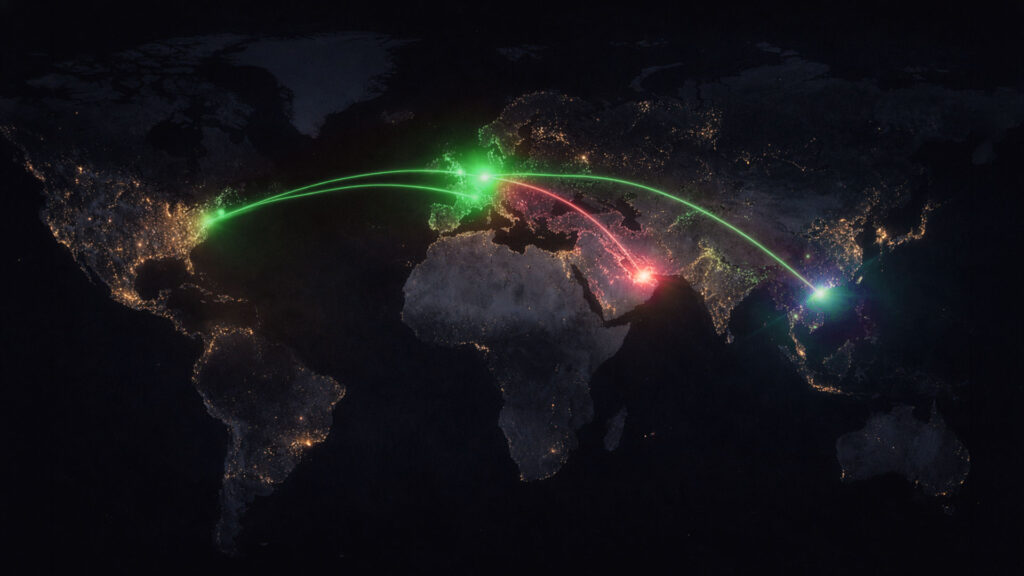
This is Part 2 of The Disruption Playbook — a six-part series offering practical guidance for study abroad professionals navigating the 2026 aviation disruption. Part 1 laid out what has changed and why. This instalment answers the question that is now coming from program directors across the US and Australia: where do we go instead?
The disruption is real. But study abroad does not stop — it redirects.
We have been hearing a consistent set of questions from program directors over the last six weeks. They are not asking whether to continue offering international education. They are asking which destinations can deliver the same learning outcomes their programs were built around — without the routing dependencies, cost increases, and schedule unpredictability that the Middle East situation has introduced.
What follows is a practical framework for answering that question, followed by a detailed look at the destinations we think deserve the most serious consideration right now.
The Learning Objective Swap: A Framework for Redirecting
The conversation goes wrong when it starts with destinations. ‘Where should we go instead of Dubai or Doha?’ is the wrong first question — it treats the destination as the product, when the destination is the context in which learning happens.
The right question is: what were students supposed to learn? And which destinations can deliver that learning — accessibly, reliably, and without the routing assumptions that the current disruption has broken?
We have been working through this framework with university partners over the last several weeks. The table below is a starting point for the conversation, not a complete answer:
If your program aimed at… | Consider redirecting to… | What it delivers |
|---|---|---|
Sustainability & urban systems | 🇮🇹 Florence, 🇵🇹 Portugal, 🇪🇸 Barcelona | CDP recognition, Slow Food, smart city ecosystems, zero Gulf routing |
Business & entrepreneurship | 🇪🇸 Barcelona, 🇸🇬 Singapore | SDG 11, mature internship market, international professional culture |
Technology & innovation | 🇰🇷 Seoul, 🇯🇵 Japan, 🇸🇬 Singapore | Direct transpacific routing, world-class innovation ecosystems, no Gulf dependency |
Arab culture & post-oil economies | 🇲🇦 Morocco | Arabic immersion, leading solar infrastructure, Africa-Europe gateway |
Healthcare & global health | 🇿🇦 South Africa, 🇹🇭 Thailand | No Gulf routing, strong public health systems, experiential access |
SDG-aligned project-based learning | 🇮🇹 Florence, 🇪🇸 Barcelona, 🇰🇷 Seoul | Authentica standard programs — open for Summer and Fall 2026 |
The goal is not to find a destination that resembles the one you lost. The goal is to find one that serves the same learning objectives — and in some cases, serves them better.
First, resist the temptation to substitute on geography alone. A program built around Gulf business culture and Arabic immersion cannot be simply relocated to Barcelona because Barcelona is accessible. The learning objectives are different, and the substitution will not hold up to scrutiny from students or faculty.
Second, the destinations with the strongest case right now are not just those that are operationally accessible — they are the ones that have been building the academic and professional infrastructure to support serious programs for years. Operational convenience is necessary but not sufficient.
Third, some institutions will find that this moment is an opportunity to upgrade, not just substitute. Programs that were geographically convenient but academically thin can be replaced with something more intentional.
Italy — Florence: The Disruption-Proof Standard
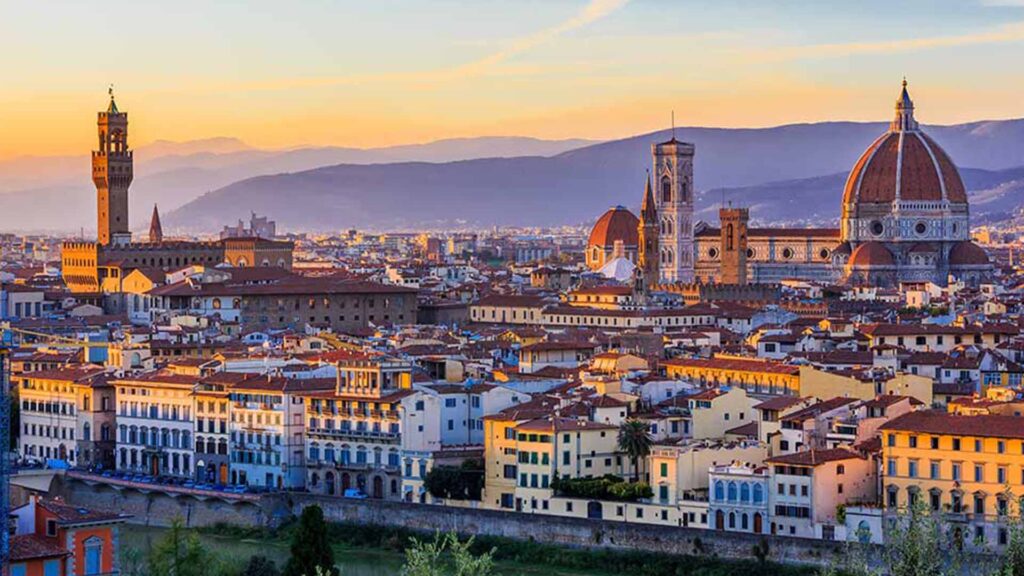
Let us be direct about why Florence belongs at the top of this list: not because it is the most exotic alternative, but because it is the most operationally reliable one — and in the current environment, operational reliability is worth considerably more than it was twelve months ago.
Italy is directly routed from every major US hub through transatlantic connections with zero dependence on Gulf corridor access. Italian visa processing for US students for short programs is well-established, fast, and has none of the uncertainty currently affecting Gulf-adjacent destinations. Florence has been welcoming international academic programs for decades and has the institutional infrastructure to support them.
But the operational case is only part of the argument. What makes Florence genuinely compelling as a learning destination in 2026 is what the city is actively doing — not what it historically was.
The Middle East Airspace Crisis: The Facts
Florence holds global recognition from the CDP (Carbon Disclosure Project) for its climate action. Lonely Planet has honored it in two sustainability categories simultaneously — the only Italian city to receive that distinction. It is leading on sustainable tourism policy, championing the Slow Food movement that began in Italy, and serving as one of the world’s most substantive real-world case studies for how a historic city navigates the tension between preservation and progress.
For programs built around the UN Sustainable Development Goals, that tension is not a complication. It is the curriculum:
- Sustainable tourism management in a city of 400,000 that receives 16 million visitors annually — the management challenges this creates are visible and concrete
- Urban development under constraint: how do you develop a city when every building is a UNESCO World Heritage site?
- The Slow Food movement and its downstream implications for food systems, circular economy, and agricultural sustainability
- Brownfield regeneration and green infrastructure investment happening in real time, observable to students on any walk through the city
Study abroad in Florence is not a backdrop. It is a city that functions as a living classroom for the questions that matter most to students and institutions right now.
The Authentica Florence Program
Program at a glance
- Semester: $17,900 | 12–15 credits (Required + Electives)
- Summer: $5,670 | 6 credits
- Core curriculum: Sustainable Development in Context + Innovation in Action: Project-Based Learning
- SDG focus
- Accreditation: Florida Agricultural & Mechanical University (FAMU)
- Housing: Vetted shared apartments or homestays in authentic Florentine neighborhoods
- Routing: Direct transatlantic from all major US gateways — zero Gulf dependency
- Applications: Rolling — Summer and Fall 2026 are now open
Authentica’s standard program in Florence was built from the ground up around three pillars: UN SDGs, project-based learning, and career development against NACE competencies. Students are not simply studying in Florence — the program uses the city deliberately as a classroom, with field visits, community partnerships, and project work embedded in the curriculum from the first week.
“Florence works for universities because it isn’t trying to be a study abroad destination—it’s a city that has been learning alongside international students for centuries. The program infrastructure, the faculty relationships, the community access: none of it was built for tourism. It was built for the kind of deep engagement that changes how students think.”
— Lorenzo Ciccarelli, Florence Program Director, Authentica
Florence is open and enrolling for Summer and Fall 2026. Apply Now
Spain — Barcelona: Where Sustainability Meets the Professional World
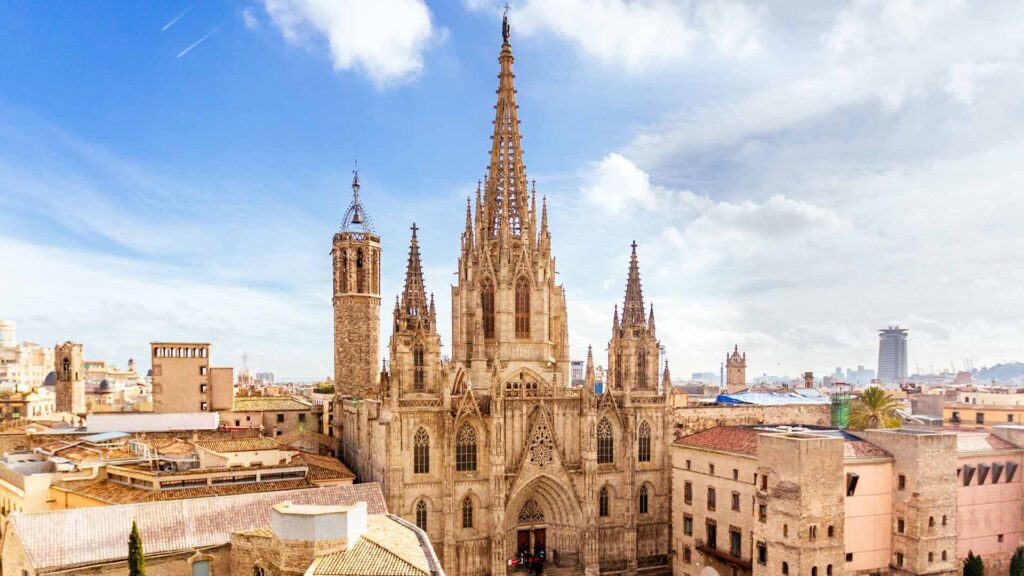
If Florence is where students learn to see sustainability through history, culture, and constraint, Barcelona is where they see it through innovation, enterprise, and policy — and they do so inside one of Europe’s most professionally accessible cities.
Barcelona holds the number one global ranking for SDG 11 — making cities inclusive, safe, resilient, and sustainable — and for SDG 17, strengthening the partnerships required to achieve the goals. These are not aspirational claims. They reflect a city that has hosted the Smart City Expo World Congress every year since 2011, that runs one of Europe’s most dynamic startup ecosystems, and that has spent over a decade building genuine professional infrastructure in sustainability, technology, media, design, and social innovation.
Like Florence, Barcelona is fully accessible through direct transatlantic routing with zero dependence on Gulf connectivity. For institutions looking to offer students a complementary European experience — one that emphasizes the professional and entrepreneurial dimensions where Florence emphasizes the historical and cultural — Barcelona is the natural counterpart.
Spain — Barcelona: Why It Delivers on Business and Innovation Learning Objectives
For programs focused on entrepreneurship, social innovation, and professional development, Barcelona offers something difficult to replicate elsewhere in Europe: a city where students engage with sustainability not as an abstraction studied in a classroom, but as something operating inside real organizations. The internship market is mature and internationally accessible. The professional culture is genuinely multilingual. And the student population is international enough that the peer-to-peer learning environment is exceptionally rich.
The ‘learning objective swap’ that works best here is for programs previously focused on Gulf-based business culture, emerging economy entrepreneurship, or smart city innovation. Study abroad in Barcelona can deliver on all three of those objectives — with the added advantage of direct routing and well-established institutional infrastructure.
The Authentica Barcelona Program
Program at a glance
- Semester: $17,900 | 12–15 credits (Required + Electives)
- Summer: $5,670 | 6 credits
- Core curriculum: Sustainable Development in Context + Innovation in Action: Project-Based Learning
- SDG focus
- Accreditation: Florida Agricultural & Mechanical University (FAMU)
- Housing: Verified shared apartments or homestays in authentic Barcelona neighborhoods
- Routing: Direct transatlantic from all major US gateways — zero Gulf dependency
- Applications: Rolling — Summer and Fall 2026 now open
The Authentica Barcelona program runs on the same academic architecture as Florence — the same SDGs framework, the same Innovation in Action project-based learning course, the same career development focus against NACE competencies — applied through Barcelona’s specific urban, cultural, and professional context. For institutions already running a Florence program, Barcelona is the natural complement. For institutions looking for a single European program that emphasizes professional outcomes, Barcelona is a strong standalone option.
Barcelona is open and enrolling for Summer and Fall 2026. Apply Now
South Korea — Seoul: Asia's Rising Study Abroad Destination
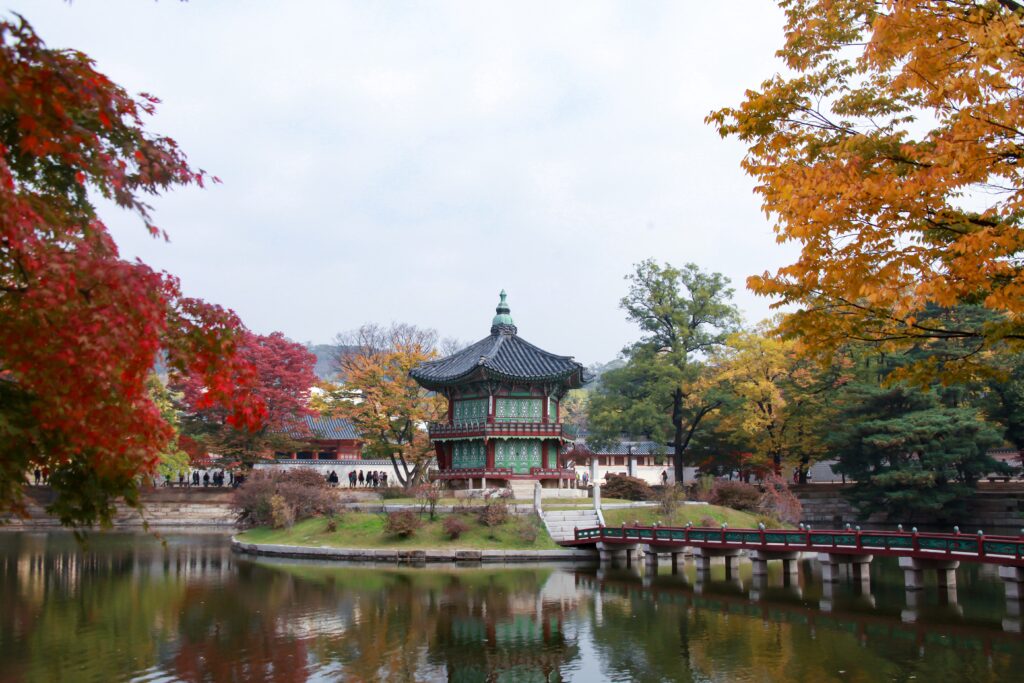
The Asia conversation in international education deserves more candor than it often receives. Asia is not a single opportunity. It is a continent of radically different political environments, institutional infrastructures, and relationships with Western academic culture. Not all destinations that appear compelling on paper can deliver consistently excellent student experiences on the ground.
We have been working in experiential learning across the Asia-Pacific since 2012. We know the difference between a destination that looks exciting in a brochure and one that can support a rigorous, professionally meaningful program year after year. With that experience as context, here is what we are willing to say directly: of all the Asian destinations gaining institutional attention right now, South Korea — and Seoul in particular — stands out for reasons that go well beyond the current disruption:
- An education system that is globally studied as a model — South Korea’s PISA rankings and higher education infrastructure are among the world’s strongest
- A technology and innovation ecosystem rivalling Silicon Valley, anchored by Samsung, Hyundai, LG, and a vibrant startup culture that has produced globally competitive companies
- A cultural economy — K-pop, Korean cinema, gaming, K-beauty, fashion — that gives students immediate cultural literacy with genuine global professional relevance
- Direct transpacific flights from major US gateway cities that bypass the Middle East corridor entirely
- Exceptional safety, modern infrastructure, and an increasingly English-accessible professional environment that makes institutional operations straightforward
For institutions that had Asia programming routed through Gulf hubs, South Korea’s transpacific accessibility makes it operationally attractive right now. For institutions just beginning to explore Asia, it may be the most natural starting point: a developed economy with world-class universities, strong institutional norms, and a cultural moment that students find genuinely engaging.
COMING SOON
A New Authentica Standard Program in Seoul
We are building a new standard program in Seoul, in partnership with Sogang University — one of South Korea’s most internationally respected academic institutions. Everything that has made our European programs work — the academic depth, the SDGs-grounded curriculum, the real focus on career outcomes — applied in one of Asia’s most dynamic, forward-looking cities.
Seoul stands out for reasons that matter institutionally right now:
- Direct transpacific routing from major US gateway cities — zero Gulf corridor dependency
- A technology and innovation ecosystem anchored by Samsung, Hyundai, and a vibrant startup culture
- A globally respected education system — consistently among the world’s highest PISA performers
- A cultural economy — K-pop, cinema, fashion, gaming — giving students immediate, globally relevant cultural literacy
- Exceptional safety, infrastructure, and an increasingly English-accessible professional environment
We will have more to share in the coming weeks. If Seoul has been on your institution’s radar, now is the time to open a conversation.
Faculty and program directors welcome to reach out early: info@authentica.com
Four Other Destinations Worth Watching
Florence, Barcelona, and Seoul are our primary recommendations at this stage. But they are not the only destinations that deserve serious consideration. Here are four others that come up frequently in conversations with program directors, each offering something distinct for specific learning objectives:
Portugal — Sustainability, Startup Culture, and European Accessibility
Lisbon and Porto have quietly become two of Europe’s most interesting destinations for programs focused on sustainability, urban innovation, and entrepreneurship. Portugal regularly generates more than 100% of its electricity needs from renewable sources for days at a time — a real and observable fact that carries significant pedagogical weight for sustainability-focused programs. Its startup ecosystem has grown substantially, particularly in Lisbon, which has hosted the Web Summit since 2016. Direct US routing is straightforward, costs are lower than most Western European capitals, and the political environment is stable. For institutions whose programs were focused on energy transition, social entrepreneurship, or Southern European culture and society, Portugal is worth a serious look.
Morocco — Arabic Immersion, Solar Leadership, and the Africa Pivot
Morocco is one of the most underutilized study abroad destinations for US institutions, and the current disruption has made its case stronger. It offers something genuinely rare: direct access to Arabic language and culture without the political complexity of Gulf destinations, combined with some of the world’s most ambitious renewable energy infrastructure. The Noor Ouarzazate solar complex is the world’s largest concentrated solar power plant — a field visit, not a case study. Morocco has also positioned itself as a gateway between Europe and sub-Saharan Africa, making it intellectually rich for programs focused on post-oil economies, regional development, and North-South trade dynamics. No Gulf routing is required from the US.
Japan — Technology, Healthcare, and Precision Innovation
Japan has always been a compelling destination for technology, engineering, and healthcare programs — and the current disruption has renewed institutional interest in its direct transpacific accessibility from the US West Coast. Tokyo and Kyoto offer extraordinary learning environments for students focused on precision innovation, public health systems, and the relationship between technological advancement and cultural continuity. Japan is not the easiest operating environment for institutions building new programs — the institutional culture requires careful relationship development, and the language barrier is real. But for institutions with existing partnerships or the patience to build them, the academic depth is unmatched in Asia.
Singapore — Business, STEM, and the Southeast Asia Gateway
Singapore is the most straightforward entry point to Southeast Asia for US institutions: English-language professional culture, world-class infrastructure, political stability, and a business ecosystem that is genuinely global in its orientation. For programs focused on international business, STEM, and urban sustainability, Singapore offers access to a concentration of multinational organizations and research institutions that is hard to find anywhere else in the region. The cost of living is high by Asian standards, which affects student budget planning, but the program infrastructure available is exceptional. Routes via transpacific connections — no Gulf dependency.
Five Questions Worth Asking Before You Redirect
The most productive conversations we have had with program directors navigating this disruption start not with ‘where should we go?’ but with ‘what are we actually trying to build?’ Here are five questions worth working through carefully:
1. What learning objectives was the program actually delivering on?
Not the objectives in the course catalogue — the ones students and faculty would honestly name if you asked them. Start there.
2. Which of those objectives are genuinely non-negotiable?
Some objectives may have been specific to a region — Arabic immersion, Gulf business culture, specific institutional partnerships. Others — sustainability, entrepreneurship, career development, SDG alignment — can be delivered in multiple contexts. Know which is which before you start evaluating destinations.
3. Does the routing work without Gulf dependency?
Any destination that still requires Gulf-hub connections carries the same operational risk you are trying to move away from. The destinations in this piece all offer direct transatlantic or transpacific routing. Verify this for any destination you are seriously considering.
4. Does your provider have genuine on-ground infrastructure in the alternative destination?
A provider who operated successfully in one region is not automatically qualified to deliver in another. Ask specifically: how long have you been operating here? What on-ground relationships do you have? What has gone wrong in the past, and how did you handle it?
5. What is the first-mover advantage, and how long will it last
Institutions that are positioning in alternative destinations now — building partnerships, running first cohorts, establishing on-ground relationships — will have a meaningful advantage when broader adoption follows. That window is not indefinitely open.
The students who most need international education right now are the ones who will spend their careers navigating a world that is more fragmented, more complex, and more interconnected than anything we have seen before. That makes study abroad more important — not less. The task is redirecting it, not reducing it.
In Part 3 of The Disruption Playbook, we will go deeper into risk management frameworks for uncertain environments — how to structure program contingency plans, what conversations to have with university leadership, and how to communicate with students and families when the situation is evolving. Subscribe on LinkedIn or reach out to be notified when it publishes.
— This is Part 2 of The Disruption Playbook — a six-part series offering practical guidance for study abroad professionals navigating the 2026 aviation disruption. Part 1: “The New Map: How Middle East Aviation Disruptions Are Reshaping Study Abroad.” Coming next, Part 3: “Risk Management in an Uncertain Environment.” Follow us on LinkedIn or subscribe to our newsletter to receive each instalment as it publishes.
Exploring a New Destination? Let's Talk at NAFSA.
Book a meeting with the Authentica team at NAFSA 2026. We will walk through the learning objective swap framework with you and help identify which destinations and program models fit what your institution is trying to build.
→ Book a NAFSA meeting:
Or apply directly for Florence and Barcelona: Apply Now
General Inquiries: Inquire Now