




Kindness as a habit, not just a random act!
Kindness is good for us!
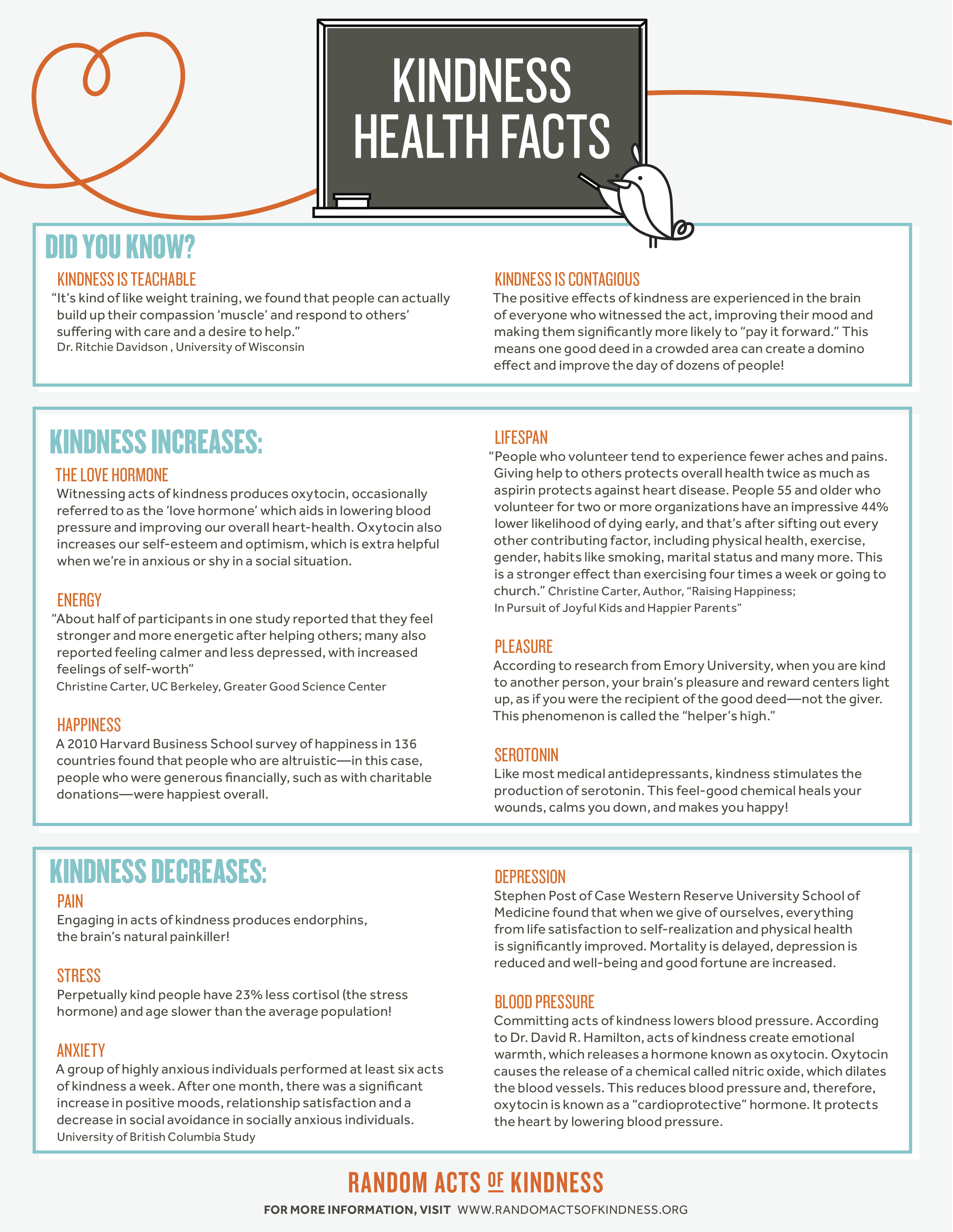
How would you like to be healthier, happier, and younger at no cost? All you have to do…is be kind! Research has shown that kindness stimulates the production of the “happy chemicals” in our brains, leading to health and happiness. These “happy chemicals” are:
- SEROTONIN: Kindness releases serotonin, which heals your wounds, calms your mind and makes you happy.
- OXYTOCIN: Kindness stimulates the production of oxytocin, the “love hormone”. Oxytocin promotes social bonding, has a calming effect, increases trust and generosity, strengthens the immune system, reduces blood pressure and – get this – even boosts virility!
- ENDORPHINS: Engaging in acts of kindness produces endorphins, the brain’s natural painkiller! This is why volunteers tend to experience fewer aches and pains.
- DOPAMINE: When you are kind to another person, it triggers the brain’s pleasure and reward center that is responsible for dopamine-mediated euphoria. This phenomenon (called the “helper’s high”) leads to people feeling stronger and more energetic, feeling calmer and less depressed, with increased feelings of self-worth.
Perpetually kind people also have 23% less cortisol (the stress hormone) and age slower than the average population!
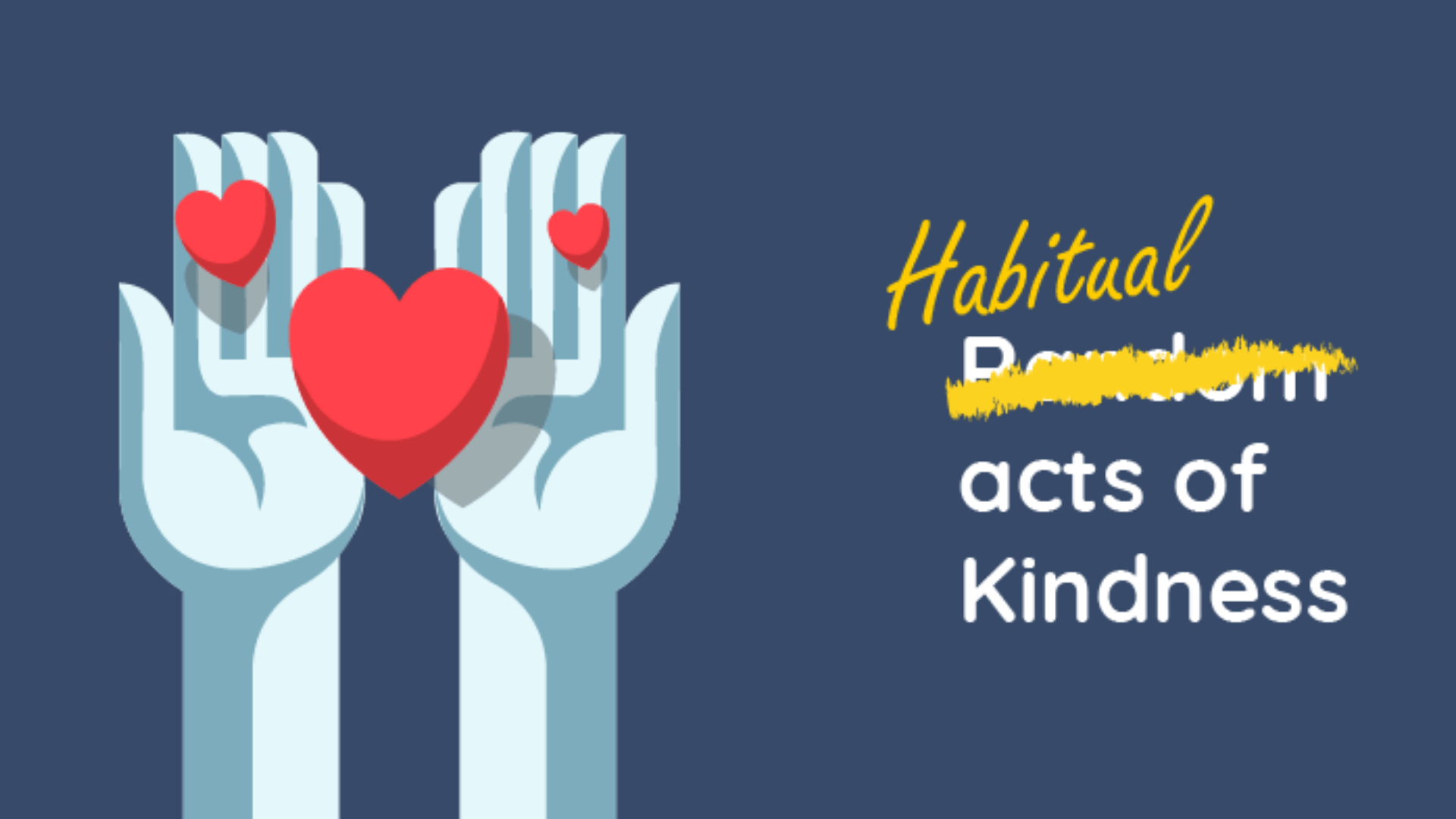
Wow – with all these benefits of kindness, why leave it to random chance? While we’re not opposed to random acts of kindness, we encourage making kindness an intentional habit!
Making kindness a habit
Dr John-Tyler Binfet of University of British Columbia suggests the following steps to make kindness an intentional habit:
- Create a recipient bank of people or organizations in need of receiving kindness or who would appreciate having something kind done for them.
- Plan the act: Who will you be kind to? How? When? Where? Will you do it anonymously? What might the recipient’s reaction be?
- Execute the act
- Reflect upon the kind acts you’ve done. In addition to perspective-taking and introspection, this reflection is shown to further increase your levels of happiness and gratitude
I know…some of you might be thinking if being kind because it is good for you will make you selfish. Actually, it is not. Research by Berkeley psychologist and founder of the Greater Good Science Centre, Dr. Dacher Keltner finds that we are hard-wired to be kind. So kindness to others is NOT selfishness…it is enlightened self-interest!
So go ahead and embrace kindness and make it a habit – it is not only good for others, it is also great for you!
As Aristotle would say: We are what we do repeatedly. Kindness, therefore, is not a random act but a habit!
Recent Blog

The Opportunity in Disruption: Why This Moment Could Strengthen Your Study Abroad Program
Closing The Disruption Playbook: why pivoting now is the choice that will shape your program for the next decade — and the formal opening of our third standard program.

Resilient Study Abroad Programs: COVID Lessons for the 2026 Disruption
This is Part 5 of The Disruption Playbook, our six-part series for study abroad professionals navigating the planning challenges of 2027–28. In earlier parts our team has written about the new global routing environment, destinations where displaced programs can find new homes, a no-regrets approach to risk management, and the budget conversations rising airfares are forcing. This installment is more personal. I want to share what I learned about program design during the 2020 pandemic, and how those lessons are shaping the choices we are making at Authentica right now.

The Budget Realities: Managing Program Costs When Airfares Are Rising
This is Part 4 of The Disruption Playbook, Authentica’s six-part series for study abroad offices navigating the fallout from the Middle East airspace crisis. Part 1 mapped the routes that changed. Part 2 introduced the learning objective swap. Part 3 covered risk management. This part deals with the number everyone is watching: what is this disruption actually costing us, and what can we do about it?

The Risk Management Playbook: Planning Study Abroad Programs in an Uncertain World
This is Part 3 of The Disruption Playbook, Authentica’s six-part series for study abroad offices navigating the fallout from the Middle East airspace crisis. Part 1 mapped the routes that changed. Part 2 introduced the learning objective swap. This part addresses the question that follows every re-routing conversation: how do we manage the risk we cannot entirely eliminate?