

● 31 March 2026 ●
The New Map: How Middle East Aviation Disruptions Are Reshaping Study Abroad
The Disruption Playbook, Part 1 of 6 | For International Educators | 8 min read

Written By
Ravi Raj | Founder & CEO, Authentica
Table of Contents
This is the first in a six-part series we are calling The Disruption Playbook — practical guidance for study abroad professionals navigating what may be the most complex planning environment since the pandemic.
If you work in international education, you already know that something has shifted. Not a single event, but several converging at once: the largest airspace closure in modern aviation history, a geopolitical landscape that has complicated programming across entire regions, rising costs that are squeezing budgets, and a generation of students asking harder questions about what study abroad actually delivers.
We have been working in experiential learning and global education since 2012 — through political upheavals, natural disasters, and a pandemic that shut down international travel entirely. But what is happening right now feels different. Not like temporary turbulence. Like a genuine redrawing of the map.
This first instalment lays out what has actually changed, why it matters for your 2026–27 planning, and which destinations and approaches are proving resilient. We are sharing our perspective openly — not because we have all the answers, but because we think the study abroad community navigates disruption better when people share what they are seeing.
What Has Actually Changed
The Middle East Airspace Crisis: The Facts
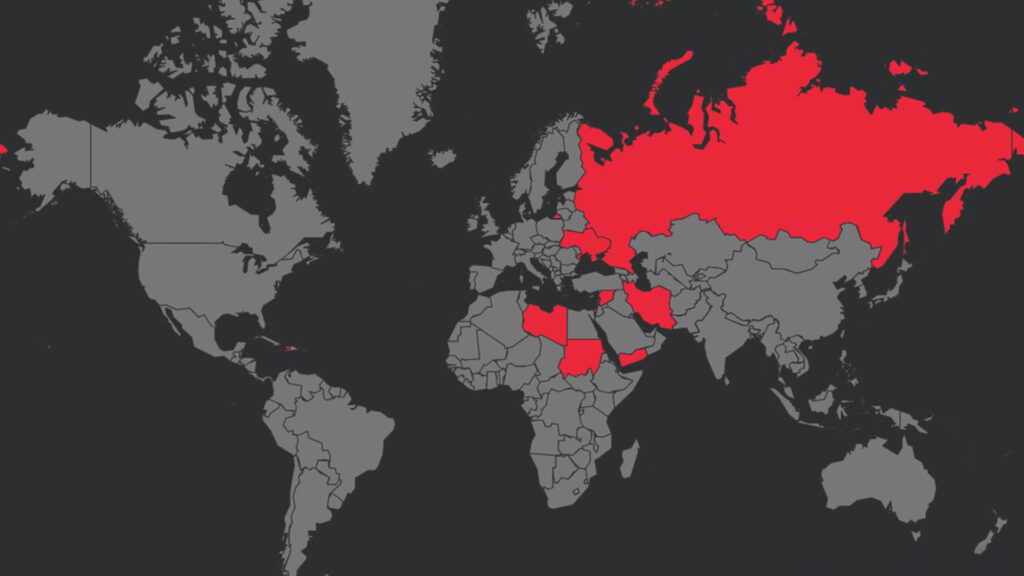
Since late February 2026, airspace over Iran, Iraq, Kuwait, Syria, and Bahrain has been closed to civilian aviation. The UAE, Qatar, and Saudi Arabia are operating at severely reduced capacity with intermittent short-notice closures. On February 28, the European Aviation Safety Agency issued a Conflict Zone Information Bulletin recommending that operators avoid the airspace of eleven countries across the region.
The practical scale of this disruption is difficult to overstate. The Gulf corridor — the airspace bridge that connected Europe, Asia, Africa, and Australia through megahubs like Dubai, Doha, and Abu Dhabi — is effectively unavailable for normal operations. Airlines are rerouting through northern corridors (Turkey, Georgia, the Caucasus, Central Asia) or southern corridors (Egypt, the Arabian Sea), adding two to four hours and 15–30% to airfares on affected routes. British Airways has cancelled Abu Dhabi flights through near year-end. Turkish Airlines has suspended or restricted services to much of the Gulf. Emirates, Qatar Airways, and Etihad are operating limited schedules.
For study abroad, the implications are structural, not temporary. Industry analysts and aviation safety organisations suggest full normalisation of the central Gulf corridor is months away at minimum, with some assessments pointing to disruption lasting through the remainder of 2026. Programmes that historically routed through Dubai or Doha — and that describes a significant share of Asia-bound and Africa-bound itineraries from North America — face higher costs, longer travel times, and schedule unpredictability that cannot be planned around with confidence.
The Middle East Airspace Crisis: The Facts
Flight cost and routing reliability should now be part of your destination feasibility conversation — not just a line item in the student budget. Destinations reachable through direct transatlantic or transpacific routing (bypassing the Gulf entirely) have a structural advantage that goes beyond price: they offer schedule predictability. When you are responsible for getting 25 students and a faculty member to and from a destination on specific dates, that predictability matters enormously. Destinations that remain fully accessible with direct US routing include: Western Europe (direct transatlantic), South Korea, Japan, Australia, and Singapore (direct transpacific). South and Southeast Asian destinations remain reachable but through longer routing with cost and schedule impacts.
The Asia Conversation Has Been Redirected
The airspace crisis compounds a shift that was already well underway. The US–China relationship has reshaped institutional strategy in ways that will play out over years, not months. China was simultaneously a major outbound destination for US study abroad students and a significant source of inbound international students. Both pipelines have been disrupted — not just through formal policy changes, but through the quieter erosion of institutional confidence and student appetite.
What is striking is that this has not reduced interest in Asia. If anything, it has intensified it — but redirected it. South Korea, Japan, Vietnam, Singapore, and Taiwan are all having conversations with US institutions at a scale that would have been difficult to imagine five years ago. For programme directors, the question is no longer whether to build an Asia programme. It is which Asia, built how, and with which partners.
The current airspace disruption accelerates this shift. Destinations reachable via transpacific routing — South Korea, Japan, Singapore, Australia — have become operationally preferable to destinations that require Gulf-corridor connections. Institutions that were already exploring these markets now have an additional reason to move forward.
Students and Families Are Raising the Bar
This is actually a positive development, even if it creates more work for programme designers. Today’s students are not going to spend a semester abroad — or ask their families to fund one — without a clear sense of what they are getting in return.
They want to know how study abroad connects to their career trajectory. They want programmes that take sustainability seriously as a practice, not a talking point. They want experiential depth — the feeling that the programme was designed for someone with their goals in mind, not assembled from available inventory. And increasingly, they want evidence of impact: what did previous cohorts actually gain?
Institutions whose programmes deliver concretely on career relevance, SDG alignment, and experiential learning are seeing stronger enrolment. Those still relying on the inherent appeal of a destination — “come to [beautiful city] for a semester!” — without articulating what students will do and learn there, are finding it harder to make the numbers work.
Destinations That Are Proving Resilient
Not all destinations are equally affected by the current disruption. And beyond operational access, some destinations have become more academically compelling precisely because of the questions students and institutions are now asking. Here are three that illustrate different dimensions of resilience.
Italy — Florence and the Green Renaissance
Florence has been a study abroad destination for decades. What makes it worth discussing in 2026 is not its history — it is what the city is doing right now.
Operationally, Italy is one of the most straightforward destinations for US institutions. Direct transatlantic routing from multiple US gateways. Established visa infrastructure. A city accustomed to international academic programmes. None of this is affected by the Middle East disruption. In a moment when operational surprises have become more common, that reliability carries more weight than it used to.
Academically, Florence is in the middle of what many are calling a Green Renaissance — and the description is earned. The city holds global recognition from the CDP (Carbon Disclosure Project) for its climate action. Lonely Planet has honoured it in two sustainability categories simultaneously — the only Italian city to receive that distinction. It is leading on sustainable tourism policy, it is the birthplace of the Slow Food movement, and it is becoming one of the world’s most compelling real-world case studies for how a historic city manages the tension between preservation and progress.
For programmes built around the UN Sustainable Development Goals, that tension is not a complication. It is the curriculum:
- Sustainable tourism management in a city of 400,000 that receives 12 million visitors annually
- Urban planning under constraint: how do you develop a city when every building is a UNESCO World Heritage site?
- The Slow Food movement and its downstream effects on food systems, circular economy, and agricultural sustainability
- Brownfield regeneration and green infrastructure investment happening in real time, visible to students walking through the city
Florence is not a city students pass through. It is a city that functions as a living classroom for the questions that matter most to students and institutions right now.
Spain — Barcelona, Where Sustainability Meets the Professional World
If Florence is where students learn to see sustainability through history and culture, Barcelona is where they see it through innovation and enterprise.
Barcelona holds the number one global ranking for SDG 11 (making cities inclusive, safe, resilient, and sustainable) and SDG 17 (strengthening partnerships to achieve the goals). These are not aspirational claims — they reflect a city that has hosted the Smart City Expo World Congress every year since 2011, that runs one of Europe’s most active startup ecosystems, and that has built genuine professional infrastructure in sustainability, technology, media, design, and social innovation.
For institutions under pressure to demonstrate the career relevance of study abroad, Barcelona offers something difficult to replicate elsewhere: a city where students can engage with sustainability not as an abstract concept studied in a classroom, but as something operating inside real organisations. The internship ecosystem is mature and internationally accessible. The professional culture is genuinely multilingual. And the student population is international enough that the peer-to-peer learning environment is exceptionally rich.
Like Florence, Barcelona is reachable through direct transatlantic routing with zero dependence on Gulf connectivity. For offices looking to offer students a complementary European option — one that emphasises the professional and entrepreneurial dimensions where Italy emphasises the historical and cultural — Spain is the natural counterpart.
South Korea — Seoul, Asia’s Rising Study Abroad Destination
The Asia conversation in international education deserves more candour than it often receives. Asia is not a single opportunity. It is a continent of radically different political environments, institutional infrastructures, and relationships with Western academic culture. Not all destinations that appear compelling on paper can deliver consistently excellent student experiences on the ground.
That said, of all the Asian destinations gaining institutional attention right now, South Korea — and Seoul in particular — stands out for reasons that go well beyond the current disruption:
- An education system that is globally studied as a model — South Korea’s PISA rankings and higher education infrastructure are among the world’s strongest
- A technology and innovation ecosystem rivalling Silicon Valley, anchored by Samsung, Hyundai, and a vibrant startup culture
- A cultural economy — K-pop, Korean cinema, gaming, K-beauty, fashion — that gives students immediate cultural literacy with global professional relevance
- Direct transpacific flights from major US gateway cities that bypass the Middle East corridor entirely
- Exceptional safety, modern infrastructure, and an increasingly English-accessible professional environment
For institutions that had Asia programming routed through Gulf hubs, South Korea’s transpacific accessibility makes it operationally attractive right now. For institutions that are just beginning to explore Asia, it may be the most natural starting point: a developed economy with world-class universities, strong institutional norms, and a cultural moment that students find genuinely engaging.
Several universities are already establishing partnerships in Seoul. Institutions that position early — while others wait for the disruption to resolve — will have a meaningful first-mover advantage as broader adoption follows.
Five Questions Worth Asking Before You Plan for 2026–27
The most productive planning conversations we have observed in this community start not with “where do we want to go?” but with “what are we actually trying to build?” Here are five questions worth sitting with:
1. Does your current destination portfolio reflect the world as it is in 2026
Not 2019. Not 2022. The routing assumptions, cost structures, and geopolitical contexts that made sense three years ago may not be the right answers today. That is worth examining honestly — not to discard what works, but to ensure you are not running a programme on autopilot because it is familiar.
2. Are your programmes delivering on career relevance?
Students and families are making increasingly rational calculations about study abroad. The programmes winning enrolment are those that answer the career question concretely — through internships, project-based learning, professional development, and measurable competency building.
3. Is sustainability integrated into your programming, or appended to it?
Students can tell the difference. Programmes where SDG alignment is woven into the curriculum, the destination choice, and the experiential design are perceived as more rigorous and more valuable than those where sustainability is a separate module or a marketing label.
4. Are you engaging with Asia — or waiting?
The institutions establishing strong partnerships and effective frameworks in Asia now, while others wait for perfect clarity, will have a significant competitive advantage when broader adoption follows. The window for first-mover positioning is not indefinitely open.
5. How resilient is your programme design to the next disruption?
Middle East crisis is a stress test. Programmes built around a single routing corridor, a single geographic concentration, or a single provider relationship are discovering their vulnerability. Portfolios diversified across regions, modalities, and partnerships are weathering this moment far better.
The Map Is Being Redrawn. That Is Not a Bad Thing.
The fundamentals of why study abroad matters have not changed. If anything, the world’s growing complexity is a stronger argument for international education than it has ever been. Students who learn to navigate difference, think across cultures, and engage with real-world problems in unfamiliar environments are exactly what the world needs more of right now.
But the programmes that deliver that experience genuinely — not nominally — will look different from the ones that were sufficient a decade ago. The institutions that thrive in this environment will be those that use disruption not as a reason to retreat, but as a reason to build something better: more operationally resilient, more academically intentional, more aligned with what students and the world actually need.
The map is being redrawn. That process is uncomfortable. But for institutions willing to look at the new map honestly, the destinations and programme models emerging from this moment are more compelling than what came before.
In the next five instalments of The Disruption Playbook, we will go deeper: into specific alternative destinations and the learning objectives they serve (Part 2), risk management frameworks for uncertain environments (Part 3), budget strategies when airfares are rising (Part 4), what the pandemic taught us about resilient programme design (Part 5), and why this moment may ultimately strengthen study abroad rather than diminish it (Part 6).
We would genuinely love to hear what you are seeing from your vantage point. What is working? What has broken? Where are you looking next? The community navigates disruption better when we share openly.
Coming soon: The Disruption Navigator Toolkit
We are developing a free resource for study abroad offices navigating the current environment — a destination accessibility matrix, risk management checklists, budget planning frameworks, and communication templates for briefing university leadership, faculty, and parents. We will share it with the community in the coming weeks. If you would like to be notified when it launches, drop us a line at info@authentica.com. If you have questions about your specific planning situation — or if you are exploring new destinations and want a candid conversation about what we have seen work in different regions — we are happy to talk: authentica.com/request-proposal
— This is Part 1 of The Disruption Playbook — a six-part series offering practical guidance for study abroad professionals navigating the 2026 aviation disruption. Coming next, Part 2: “Beyond the Gulf: Emerging Destinations That Deliver on Your Learning Objectives” — a deeper look at where displaced programmes can find homes that serve their academic goals. Follow us on LinkedIn or subscribe to our newsletter to receive each instalment as it publishes.