
Water Management and Conservation โ€” Florence, Italy Florence, Italy ยท Stewards of Our Most Precious Resource
Environmental Studies Florence Elective

Water Management and Conservation

โฑ Total Hours 45
๐ŸŽ“ Credits 3
๐Ÿ“ Location Florence, Italy
โœ“ Prerequisites None
๐Ÿ’ง
Primary Discipline
Environmental Studies
Suggested Cross Listings Environmental Science, Public Policy, Sustainability Studies
Total Hours 45
Credits 3
Prerequisites / Requirements None

Cities have diverse water-related challenges, from managing water resources in arid regions to addressing the risks posed by flooding in other cities. This course will explore the science and politics of water management with a focus on sustainable practices for conservation, irrigation, and flood control.
UN Sustainable Development Goals Wheel
Water as the foundation of sustainable life

Water is the foundation of every other SDG. This course is anchored in SDG 6 (Clean Water & Sanitation) and SDG 14 (Life Below Water), while engaging SDG 13 (Climate Action) through changing precipitation and flood risk, SDG 11 (Sustainable Cities) in urban water systems, and SDG 12 (Responsible Consumption) in agricultural and industrial use.

5 Key SDGs Addressed
SDG 6: Clean Water and Sanitation SDG 11: Sustainable Cities and Communities SDG 12: Responsible Consumption and Production SDG 13: Climate Action SDG 14: Life Below Water
Water scarcity issues The role of water management in agriculture Flood risk management The impact of climate change on water resources Water policy and governance

By the end of this course, students will be able to:

1
Explain the scientific and policy dimensions of water management and conservation.
Assessment: Fieldwork Report.
2
Analyze the challenges of water scarcity, irrigation, and flood management in different geographic contexts.
Assessment: Case Study Analysis and Group Project and Presentation.
3
Evaluate the environmental and socio-economic impacts of water management decisions.
Assessment: Case Study Analysis and Fieldwork Report.
4
Apply sustainable water management practices observed through site visits and case analyses.
Assessment: Fieldwork Report and Group Project and Presentation.
5
Reflect on global inequities in water access and governance, developing perspectives on ethical resource stewardship.
Assessment: Group Project and Presentation and Final Reflection Essay.
20%
Class Participation and Discussion
Active participation in lectures and discussions, demonstrating comprehension of water systems, sustainability challenges, and policy contexts.
All LOs
20%
Case Study Analysis
Written report (5โ€“7 pages) analyzing a local or international water management system, assessing sustainability practices, resource allocation, and governance.
LO 2, 3
15%
Fieldwork Report
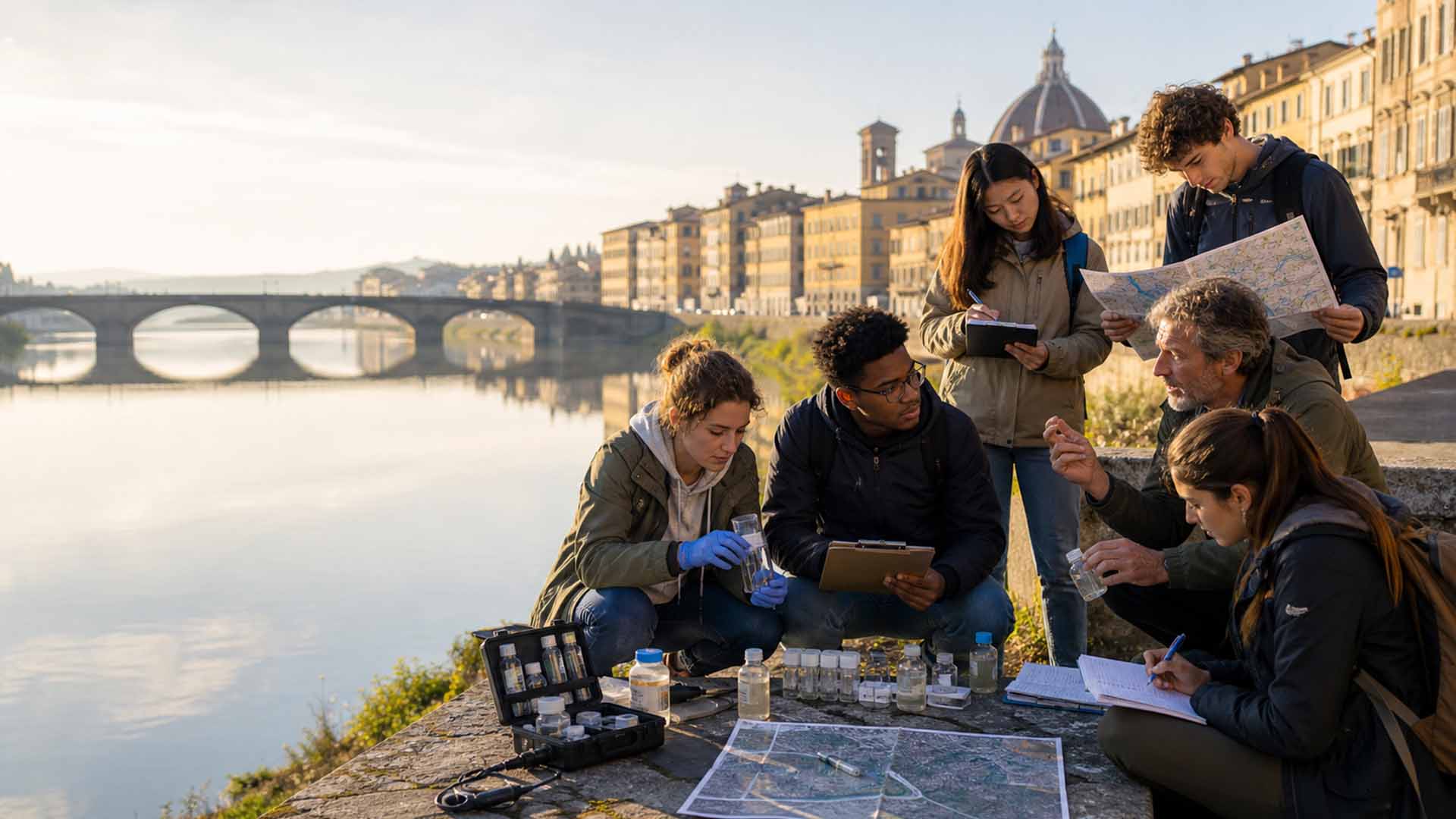
Observational report linking field site experiencesโ€”such as irrigation systems, water treatment plants, or conservation areasโ€”to theoretical and practical course concepts.
LO 1, 3, 4
25%
Group Project and Presentation
Collaborative proposal for a sustainable water strategy addressing a local or regional challenge, supported by data analysis and policy recommendations.
LO 2, 4, 5
20%
Final Reflection Essay
Individual essay synthesizing key insights from the course, connecting personal learning to ethical stewardship and global water equity.
LO 5

The course follows water through the human and natural cycle โ€” from hydrology fundamentals through governance, conservation strategies, and Italian and global case studies.

1
Global water resources and hydrological systemsUnderstanding distribution, cycles, and the scientific basis for water scarcity.
2
The waterโ€“energyโ€“food nexusInterdependencies between agriculture, energy, and water sustainability.
3
Water scarcity and drought managementTechniques for efficient irrigation, groundwater protection, and drought-resilient planning.
4
Urban water infrastructure and innovationSmart water systems, leak detection, and reuse technologies in cities.
5
Flood management and disaster mitigationStructural and non-structural measures for managing flood risk and climate resilience.
6
Policy and governance frameworksLocal, national, and international approaches to integrated water management.
7
Climate change and hydrological variabilityImpacts on rainfall, river systems, and aquifers; adaptation and forecasting.
8
Water quality and ecosystem healthPollution control, wetland restoration, and the protection of aquatic biodiversity.
9
Social equity and access to waterThe human right to water, community management, and gender dimensions in water use.
10
Innovations for the futureWater circularity, desalination, and the role of technology and policy in securing long-term resilience.
Site visit to a municipal water treatment or desalination facility
Field trip to a wetland, river restoration site, or floodplain project
Tour of agricultural irrigation systems or hydro infrastructure
Guest lecture from hydrologists, urban planners, or climate policy experts
Workshop on water footprint calculation and conservation strategies
Meeting with local water cooperatives or NGOs advocating for water rights
Books Reports & Articles Films and Recordings
Postel, Sandra. Replenish: The Virtuous Cycle of Water and Prosperity. Island Press, 2017.
Hoekstra, Arjen Y. The Water Footprint of Modern Consumer Society. Routledge, 2020.
Gleick, Peter H. The Worldโ€™s Water. Island Press, multiple volumes.
Shiva, Vandana. Water Wars: Privatization, Pollution, and Profit. South End Press, 2002.
Brown, Lester R. Full Planet, Empty Plates: The New Geopolitics of Food Scarcity. W.W. Norton, 2012.
UN-Water. World Water Development Report. Annual publication.
IPCC. Water and Climate Change Summary for Policymakers. 2021.
World Bank. Water Scarce Cities Initiative: Thriving in a Finite World. 2018.
Gleick, Peter. โ€œGlobal Freshwater Resources: Soft-Path Solutions for the 21st Century.โ€ Science, 2003.
Flow: For Love of Water (2008), Dir. Irena Salina.
Watermark (2013), Dir. Jennifer Baichwal and Edward Burtynsky.
Brave Blue World (2020), Dir. Tim Neeves.