

Sustainable Urban Planning: Case Studies
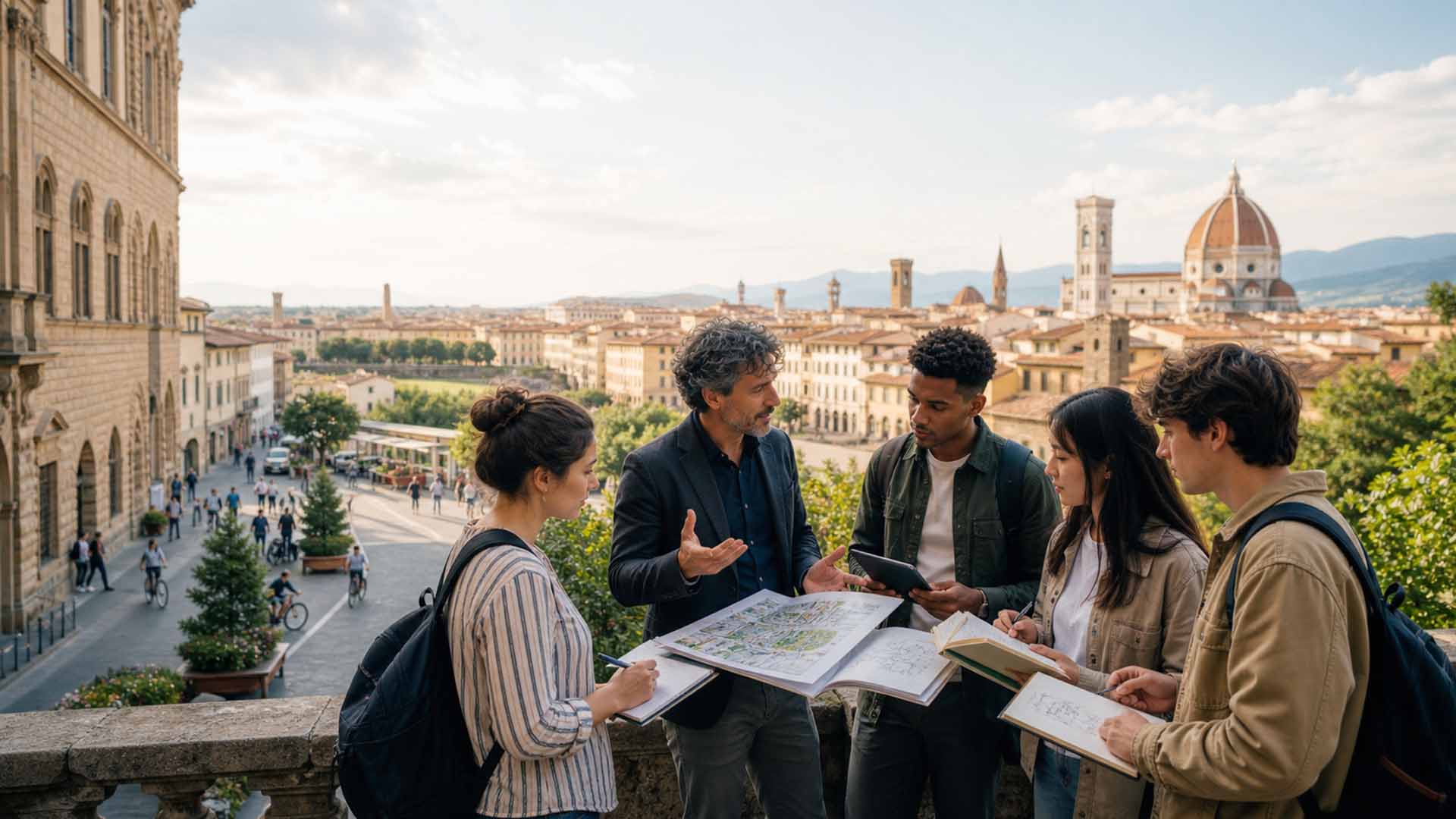
The cities of Italy represent a unique laboratory for studying sustainable urban development, blending ancient urban fabrics with innovative approaches to contemporary challenges. This course focuses on how Italian cities such as Milan, Bologna, and Florence are integrating sustainability into urban planning, transportation, and green building practices. How are these historic cities balancing preservation with innovation? What strategies are Italian municipalities employing to address climate change impacts? How can urban centers with centuries of layered development adapt to 21st-century environmental imperatives?
Using both classroom instruction and the Italian urban landscape as a learning environment, students will examine real-world case studies of how Italian cities are addressing issues like air quality, waste management, and sustainable tourism. Through lectures, field visits, and project work, students engage with both theoretical frameworks and practical applications of sustainable urban planning, developing their analytical, research, and problem-solving skills while preparing themselves to engage with global urban sustainability challenges.
Sustainable urban planning is the natural home of SDG 11 (Sustainable Cities & Communities). The course also engages SDG 13 (Climate Action) via low-carbon design, SDG 9 (Industry, Innovation & Infrastructure) through transit and built systems, SDG 10 (Reduced Inequalities) in equitable access to urban resources, and SDG 3 (Good Health & Well-Being) through walkable, green urbanism.
5 Key SDGs Addressed
By the end of this course, students will be able to:
Through theory and case studies, the course examines how cities are being redesigned for a low-carbon, equitable, and resilient future — from transit and zoning to green infrastructure and citizen-led planning.