Course Description
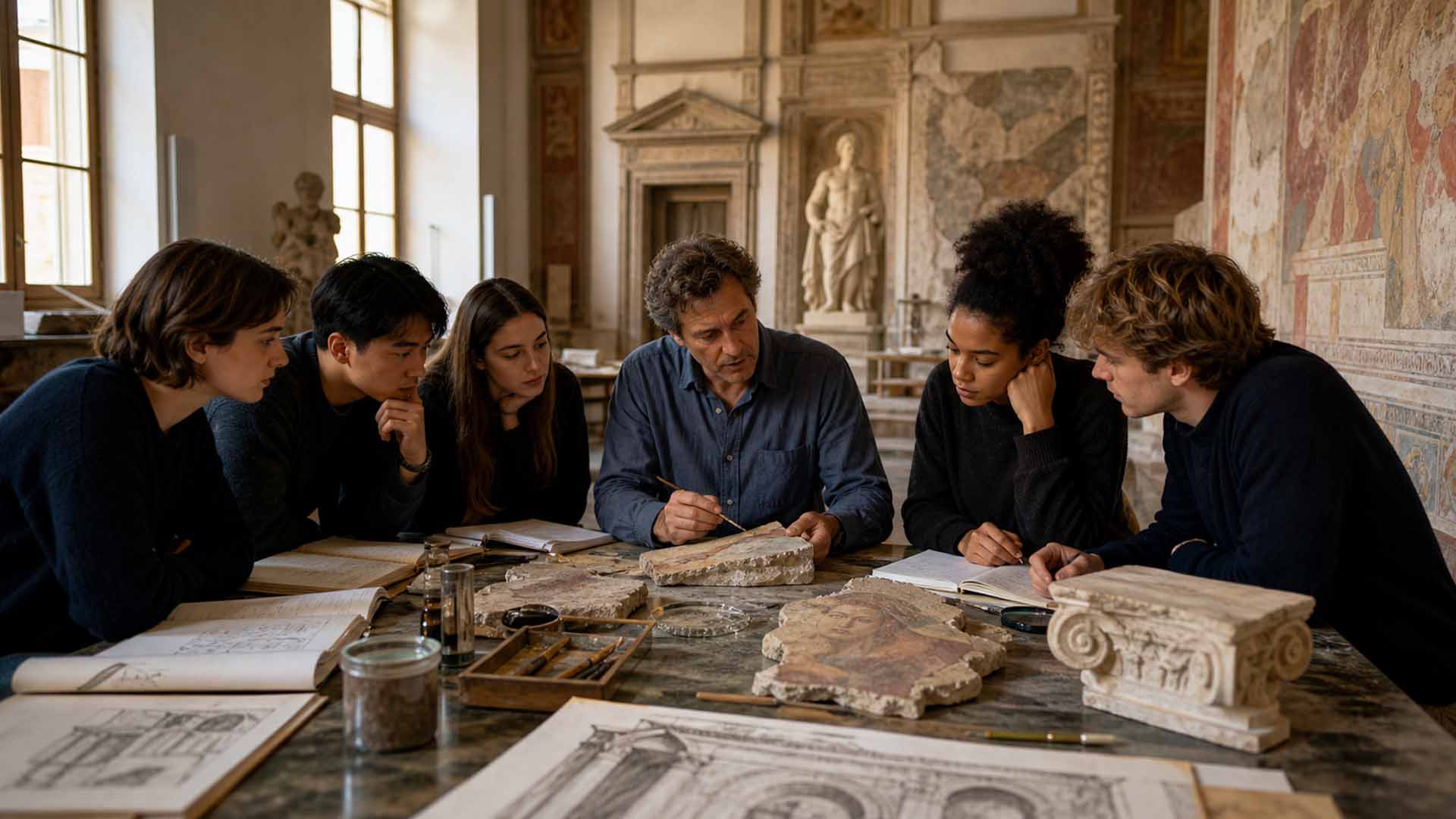
Examine the masterpieces and material culture that defined the Renaissance and continue to shape Europe's artistic identity. Students will learn about the artists, architects, and techniques that transformed visual expression, while also exploring the ethics and methods of conservation in a modern, sustainability-conscious world.
Heritage as a pillar of sustainable development
Cultural heritage sits at the heart of the 2030 Agenda — most directly through SDG 11.4 (Sustainable Cities & Communities), which calls for strengthened efforts to protect and safeguard the world's cultural and natural heritage. The course also engages SDG 4 (Quality Education), SDG 8 (Decent Work) through sustainable tourism, SDG 12 (Responsible Consumption) in conservation materials and methods, and SDG 17 (Partnerships) via UNESCO, ICOMOS, and EU heritage frameworks.
5 Key SDGs Addressed
Key Topics
Major artists, architects, and artistic movements of the Renaissance
Traditional techniques: fresco, oil painting, sculpture, and architectural design
Material analysis and conservation science
Restoration ethics and sustainable preservation practices
The role of museums in heritage sustainability
Art, culture, and tourism: balancing preservation with public access
Learning Objectives
By the end of this course, students will be able to:
1
Identify and describe the major artists, works, and movements that define the Renaissance.
Assessment: Visual Analysis Paper and Final Reflection Essay.
2
Analyze artistic techniques and materials within historical and cultural contexts.
Assessment: Visual Analysis Paper and Group Presentation.
3
Evaluate ethical and sustainable practices in art conservation and restoration.
Assessment: Fieldwork Report and Group Presentation.
4
Apply visual analysis and critical inquiry to interpret Renaissance art and its legacy.
Assessment: Visual Analysis Paper and Group Presentation.
5
Reflect on the balance between preservation, public access, and sustainability in cultural heritage management.
Assessment: Fieldwork Report and Final Reflection Essay.
Course Format and Assessment Methods
20%
Class Participation and Discussion
Active engagement with lectures, museum visits, and discussions, demonstrating comprehension of artistic analysis and preservation ethics.
All LOs
20%
Visual Analysis Paper
Written analysis of a selected Renaissance artwork or monument, addressing composition, symbolism, and cultural context.
LO 1, 2, 4
15%
Fieldwork Report
Reflective report based on visits to museums or conservation studios, linking observation to sustainability and heritage management.
LO 3, 5
25%
Group Presentation
Collaborative presentation examining an artist, artistic movement, or conservation project, integrating technical and ethical perspectives.
LO 2, 3, 4, 5
20%
Final Reflection Essay
Personal essay synthesizing insights about art, sustainability, and the enduring influence of the Renaissance.
LO 1, 3, 5
Course Outline
The course moves from the historical foundations of the Renaissance through workshop practice and material analysis, into the modern questions of conservation, museums, tourism, and the enduring legacy of Renaissance art.
1
The Renaissance ContextHumanism, patronage, and the rebirth of classical ideals.
2
Painting the RenaissanceInnovation in composition, color, and perspective.
3
The Age of SculptureThe material language of form and expression.
4
Architectural TransformationsGeometry, proportion, and the pursuit of harmony.
5
The Spread of IdeasArtistic exchange, apprenticeships, and regional styles.
6
The Workshop SystemMaterials, techniques, and the collaboration of artists and artisans.
7
Conservation and RestorationMethods, materials science, and ethical challenges.
8
Heritage in the Modern EraTourism, preservation, and sustainability in cultural management.
9
Museums and MemoryThe role of collections in shaping art history and accessibility.
10
The Renaissance LegacyContinuities in art, identity, and global cultural influence.
Field Visits and Guest Speakers
Visits to major art museums, heritage institutions, and conservation laboratories to observe restoration practices
Guest lecture by an art conservator, curator, or heritage policy expert
Workshop on sustainability in museum and heritage management
Panel discussion on conservation ethics and cultural preservation in a global context
Seminar with heritage professionals exploring the intersection of tourism, authenticity, and accessibility
Readings & Resources
Books
Articles and Reports
Films and Recordings
Hartt, Frederick, and David G. Wilkins. History of Italian Renaissance Art. Pearson, 2016.
Gombrich, E. H. The Story of Art. Phaidon, 2020.
Burke, Peter. The Italian Renaissance: Culture and Society in Italy. Polity Press, 2019.
Paoletti, John T., and Gary M. Radke. Art in Renaissance Italy. Laurence King, 2012.
Baldini, Umberto. Theory of Restoration. Nardini Editore, 1997.
ICOMOS. Principles for the Conservation of Heritage Sites in Europe. 2018.
UNESCO. Culture 2030 Indicators: Measuring Culture's Contribution to the SDGs. 2022.
European Commission. "Sustainable Cultural Heritage Management: Policy Frameworks and Practices." 2021.
The Medici: Godfathers of the Renaissance. PBS, 2004.
Inside the Uffizi. Directed by Corinna Belz and Enrique Sánchez Lansch, 2021.
The Restoration of Leonardo's Last Supper. RAI Documentary, 2020.
Booth, Eric. "Why Art Is Essential to Democracy." TED Talk.