Course Description
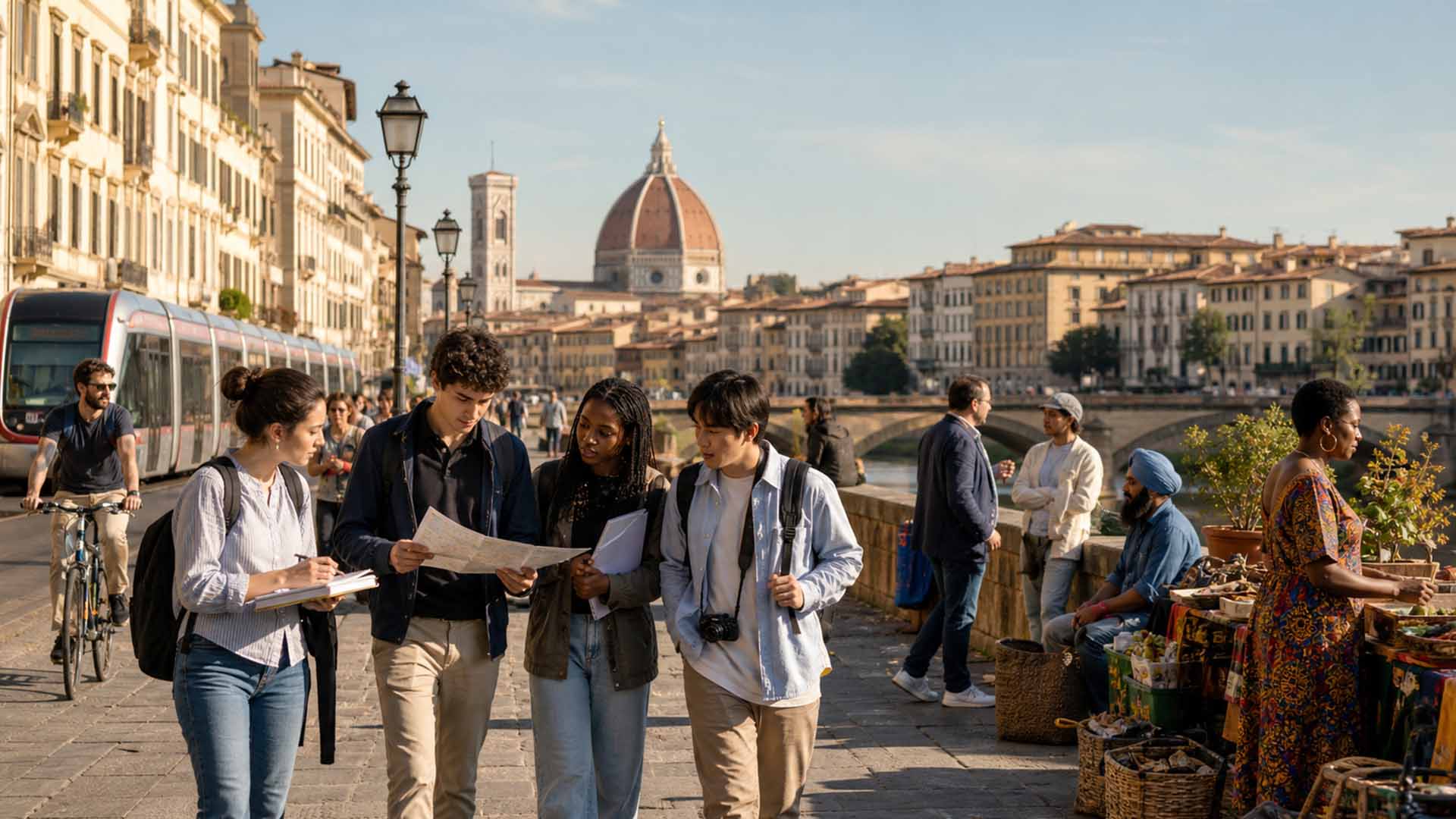
Explore the evolution of urban environments from their medieval roots to the complexities of the modern era. This course examines how cities reflect cultural diversity, economic forces, and technological change, while also facing the challenges of sustainability, migration, and heritage preservation. Students will gain a multidimensional understanding of how cities balance growth with environmental and social responsibility.
Cities at the centre of the 2030 Agenda
More than half the world lives in cities — making SDG 11 (Sustainable Cities & Communities) the natural anchor of this course. Through the lens of urban anthropology, students also engage SDG 10 (Reduced Inequalities) via migration and gentrification, SDG 13 (Climate Action) through urban ecology, SDG 8 (Decent Work) in shifting labour structures, and SDG 16 (Peace, Justice & Strong Institutions) in questions of governance, equity, and ethical urban renewal.
5 Key SDGs Addressed
Key Topics
The historical development of cities and urbanization
Migration patterns, ethnic communities, and social dynamics
Public spaces, monuments, and the role of cultural heritage
Urban sustainability: environmental, economic, and social challenges
Globalization, technology, and their local impacts
Comparative urban studies in Europe and beyond
Learning Objectives
By the end of this course, students will be able to:
1
Explain how historical, cultural, and economic forces shape the evolution of urban environments.
Assessment: Case Study Analysis.
2
Analyze migration, diversity, and social change in cities as expressions of global interconnectedness.
Assessment: Case Study Analysis and Group Project.
3
Evaluate how urbanization impacts sustainability, identity, and cultural heritage.
Assessment: Fieldwork Report, Case Study Analysis, and Group Project.
4
Apply anthropological perspectives to interpret urban dynamics through field observation.
Assessment: Fieldwork Report and Group Project.
5
Reflect critically on the role of cities as living systems balancing progress, preservation, and equity.
Assessment: Final Reflection Essay and Group Project.
Course Format and Assessment Methods
20%
Class Participation and Discussion
Active contribution to in-class discussions and engagement with urban case studies and readings, demonstrating understanding of anthropological and sociocultural perspectives.
All LOs
15%
Fieldwork Report
Reflective report based on field observations from site visits, analyzing how cultural, economic, and spatial dynamics shape urban transformation.
LO 3, 4
20%
Case Study Analysis
Research paper (5–7 pages) examining a specific city or urban issue, integrating theoretical and ethnographic perspectives.
LO 1, 2, 3
25%
Group Project and Presentation
Collaborative project analyzing an urban sustainability challenge, comparing cities or proposing community-based solutions.
LO 2, 3, 4, 5
20%
Final Reflection Essay
Personal synthesis connecting course themes, field experiences, and anthropological frameworks to the student's understanding of cities in transition.
LO 5
Course Outline
The course traces cities from their ancient roots to the questions facing the contemporary metropolis — moving through industrialization, migration, public space, sustainability, gentrification, and the future of urban life.
1
Introduction to Urban AnthropologyThe study of cities as cultural and social systems; methods of observation and interpretation.
2
The Birth of CitiesFrom ancient settlements to medieval urban centers; the material and symbolic functions of the city.
3
Urbanization and IndustrializationEconomic forces, migration, and the transformation of urban labor and class structures.
4
The City as a Cultural MosaicMigration, ethnicity, and identity in the modern metropolis.
5
Public Spaces and Collective MemoryMonuments, architecture, and urban storytelling.
6
Urban Sustainability and Environmental ChangePlanning, pollution, and the politics of urban ecology.
7
Globalization and the Contemporary CityDigital infrastructures, mobility, and cosmopolitanism.
8
Heritage and GentrificationPreservation, displacement, and ethical urban renewal.
9
Cities in Comparative PerspectiveCross-cultural case studies from Europe, North Africa, and the Middle East.
10
The Future of CitiesResilience, innovation, and human-centered urban design.
Field Visits and Guest Speakers
Site visits to historic districts, artisan workshops, and redevelopment areas illustrating layers of urban change
Exploration of local markets and cultural hubs as spaces of community interaction and economic exchange
Guest lecture by an urban anthropologist, sustainability planner, or sociologist specializing in city development
Workshop on field observation and ethnographic techniques for urban research
Panel discussion on heritage conservation, urban resilience, and policy innovation in contemporary Europe
Readings & Resources
Books
Articles and Reports
Films and Recordings
Low, Setha M. The Anthropology of Cities: Imagining and Theorizing the City. Routledge, 2019.
Harvey, David. Rebel Cities: From the Right to the City to the Urban Revolution. Verso, 2012.
Zukin, Sharon. Naked City: The Death and Life of Authentic Urban Places. Oxford University Press, 2010.
Geertz, Clifford. Local Knowledge: Further Essays in Interpretive Anthropology. Basic Books, 2000.
Smith, Michael Peter. Transnational Urbanism: Locating Globalization. Wiley-Blackwell, 2001.
UN-Habitat. World Cities Report. 2022.
European Environment Agency. The Urban Environment in Europe. 2023.
JSTOR Daily. "Anthropology and the Changing City." 2021.
Urbanized. Directed by Gary Hustwit, 2011.
The Human Scale. Directed by Andreas M. Dalsgaard, 2012.
Chakrabarti, Vishaan. "The 4 Commandments of Cities." TED Talk.