
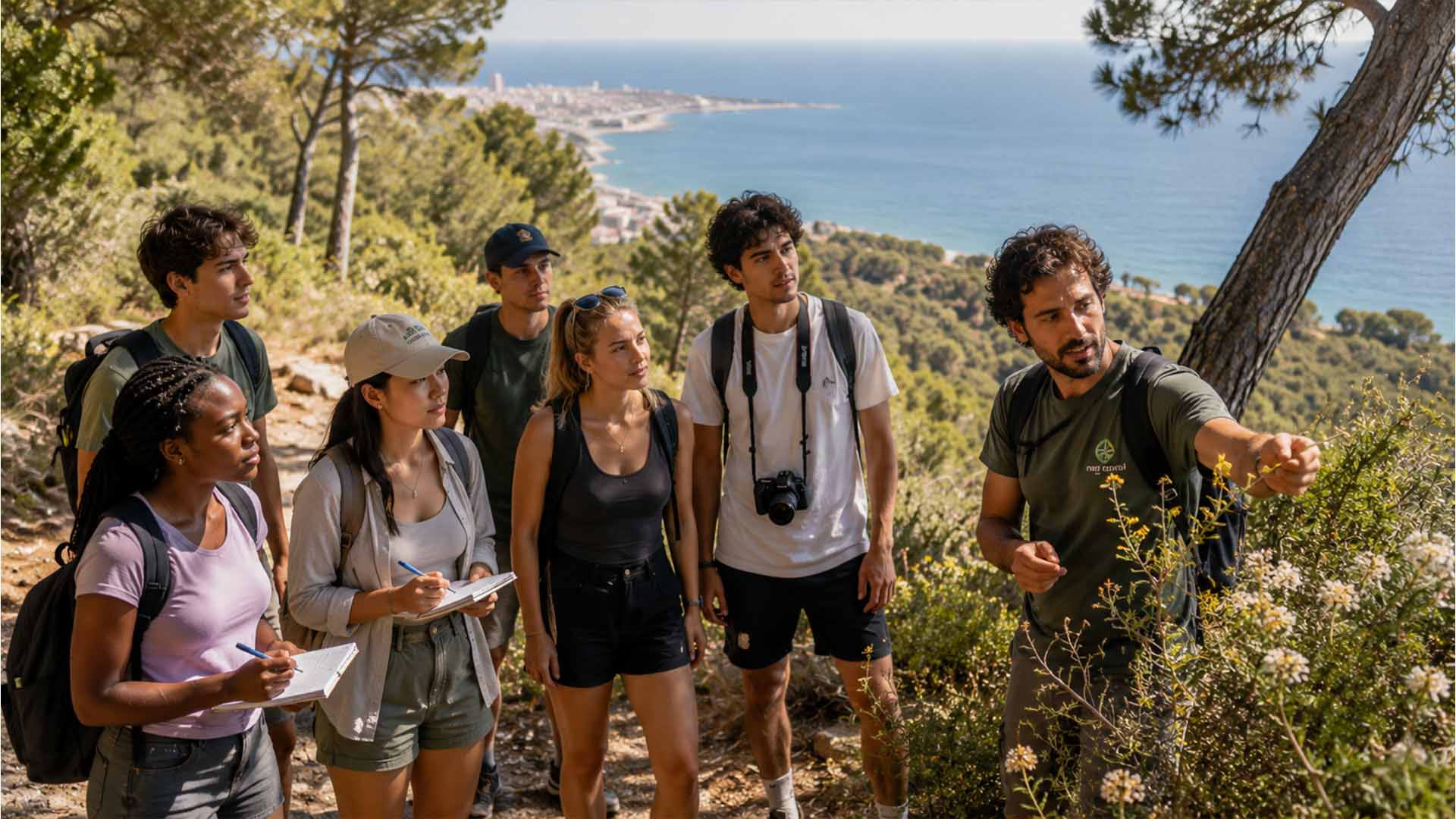
Barcelona, Spain โ€” host city for the Eco-Tourism & Conservation in Natural Reserves course Barcelona, Spain ยท Mediterranean Ecosystems & Catalan Parks
Environmental Studies Elective

Eco-Tourism & Conservation in Natural Reserves

โฑ Total Hours 45
๐ŸŽ“ Credits 3
๐Ÿ“ Location Barcelona, Spain
โœ“ Prerequisites None
๐ŸŒฟ
Primary Discipline
Environmental Studies
Suggested Cross Listings Sustainability, Geography, Hospitality & Tourism Studies
Total Hours 45
Credits 3
Prerequisites / Requirements None

Spain presents a vibrant case study in eco-tourism, conservation, and cultural heritage preservation. This course explores the intersections of sustainable tourism and environmental stewardship across the Spanish context, with a regional focus on Catalonia. From national parks and biosphere reserves to urban green infrastructure and community-based tourism, students will assess the role of eco-tourism in preserving biodiversity and promoting sustainable development. Based in Barcelona, the course integrates field experiences, expert guest speakers, and critical inquiry into Spain's evolving ecological and tourism policies.
UN Sustainable Development Goals Wheel
Aligned with 5 key UN Sustainable Development Goals

Catalonia's protected areas anchor an applied study of conservation and tourism. The course most directly engages SDG 14 (Life Below Water) via marine and coastal biodiversity, SDG 15 (Life on Land) for protected areas, SDG 11 (Sustainable Cities and Communities), SDG 13 (Climate Action), and SDG 8 (Decent Work and Economic Growth) through sustainable tourism livelihoods.

5 Key SDGs Addressed
SDG 8: Decent Work and Economic Growth SDG 11: Sustainable Cities and Communities SDG 13: Climate Action SDG 14: Life Below Water SDG 15: Life on Land
Principles of eco-tourism and sustainable travel Conservation efforts in natural parks Balancing tourism growth with environmental protection Community engagement in sustainable tourism initiatives The impact of climate change on natural habitats

By the end of this course, students will be able to:

1
Define key principles of eco-tourism and sustainable travel in the Spanish and global context.
2
Analyze the ecological and socio-cultural impacts of tourism in Spain's protected regions.
3
Evaluate regional conservation and sustainable tourism strategies through place-based learning.
4
Design eco-tourism approaches that promote biodiversity, heritage, and community benefit.
5
Reflect critically on climate change threats and tourism policy responses in Spain.
20%
Participation and Engagement
Active participation in lectures, field visits, and group discussions. Students are expected to engage critically with materials and contribute respectfully to dialogue.
All LOs
20%
Field Study Reports
Students will write two short reports (10% each) that synthesize learnings from on-site visits with course concepts and sustainability principles.
LO 2, 3
15%
Case Study
A 3-page case study that investigates a tourism-conservation conflict or success story in Spain. Emphasis on stakeholder perspectives and ecological outcomes.
LO 2, 3, 4
25%
Group Project and Presentation
Collaborative research and design of a proposed eco-tourism model for a chosen region in Spain, including stakeholder mapping, environmental analysis, and promotional plan.
LO 4, 5
20%
Final Reflection Paper
An individual 5โ€“7-page paper synthesizing field experiences, course themes, and personal growth, with a focus on future applications of sustainable tourism.
All LOs
1
Introduction to Ecotourism in Spain and the MediterraneanCore principles of eco-tourism, its global evolution, and how Spain's diverse landscapes shape its sustainability goals.
2
Protected Areas in Spain โ€“ Structure, Policy, and BiodiversitySpain's network of national parks, biosphere reserves, and regional protections, including how conservation policies are implemented.
3
Coastal Ecosystems and Conservation ChallengesPressures facing Mediterranean coastal and marine environments, including tourism development, biodiversity threats, and marine park management.
4
Community-Based and Rural Tourism in CataloniaHow Catalan towns and rural communities use eco-tourism to support economic growth while preserving the environment and cultural identity.
5
Collserola Natural Park โ€“ Nature on the Edge of the CityChallenges and benefits of maintaining a large urban green space in a metropolitan context.
6
Climate Change and the Spanish MediterraneanSpecific impacts of climate change in Mediterranean ecosystems, focusing on drought, fire risk, biodiversity loss, and tourism adaptation strategies.
7
Midterm Field Study Debrief + Case Study WorkshopSynthesizing insights from field visits, share observations in small groups, and begin planning individual case studies related to tourism and conservation.
8
Barcelona's Waterfront and Urban Eco-TourismThe transformation of Barcelona's waterfront from industrial zones to green tourism hubs, including marine conservation initiatives and urban beach management.
9
Garraf Natural Park โ€“ Forests, Vineyards, and BiodiversityGarraf's Mediterranean ecosystems, focusing on sustainable land use, fire prevention, and ecological education.
10
Sustainable Lodging and Heritage Site ManagementStrategies for eco-friendly accommodations and preserving built heritage within tourism destinations in and around Barcelona.
11
Urban Sustainability and Green Infrastructure in BarcelonaUrban ecological planning in Barcelona, including green roofs, superblocks, cycling infrastructure, and sustainable public spaces.
12
Innovation in Eco-Tourism: Tech, Platforms, and StorytellingHow digital storytelling, platforms, and tourism technologies support the visibility and sustainability of lesser-known Spanish destinations.
13
Final Presentations and Reflective SynthesisPresentation of group eco-tourism projects and submit final reflection papers, tying together personal experiences and academic learning.
Parc de Collserola โ€“ Metropolitan natural park and ecological corridor
La Fร brica del Sol โ€“ Urban sustainability and green innovation center
Parc del Garraf โ€“ Mediterranean forest and biodiversity conservation
Barcelona Waterfront + CRAM โ€“ Marine biodiversity, sustainable coastlines, and conservation rescue center
Parc de la Ciutadella and Urban Gardens โ€“ Green spaces and public education
Espigoladors and Biciclot Cooperative โ€“ Social and environmental sustainability in action
Guest speakers may include local NGO leaders, environmental scientists, ecotourism entrepreneurs, and public sector tourism planners
Using the city as a classroom is an integral element of education abroad, and this course will include several field visits, as well as assignments that prompt students to engage actively with their host context. Field visits vary across terms, but examples include those listed above.
Books Articles and Reports Multimedia
Fennell, David A. Ecotourism. 5th ed., Routledge, 2021.
Honey, Martha. Ecotourism and Sustainable Development: Who Owns Paradise? 2nd ed., Island Press, 2008.
Eagles, Paul F.J. "Governance of Recreation and Tourism in Protected Areas." Journal of Sustainable Tourism, vol. 17, no. 2, 2009, pp. 231โ€“248.
Higham, James E.S., and Lรผck, Michael. "Ecotourism: Pondering the Paradoxes." Journal of Ecotourism, vol. 6, no. 1, 2007, pp. 1โ€“9.
Bardolet, E., and Sheldon, P. J. "Tourism in Catalonia: Culture, Identity, and Management." Annals of Tourism Research, vol. 35, no. 2, 2008, pp. 447โ€“467.
Prats, Lluรญs. "Ecotourism in Spain: Between Conservation and Development." Journal of Tourism and Cultural Change, vol. 7, no. 3, 2009, pp. 144โ€“159.
Weaver, David B. "Comprehensive and Minimalist Dimensions of Ecotourism." Annals of Tourism Research, vol. 32, no. 2, 2005, pp. 439โ€“455.
Generalitat de Catalunya โ€“ Department of Climate Action and Natural Heritage.
Parc Natural de Collserola. parccollserola.net
UNESCO World Heritage Spain. whc.unesco.org
Fundaciรณ CRAM. cram.org
"EcoCatalunya" video series by Catalunya Turisme
Ebro Delta and Catalan conservation documentaries (TV3 / RTVE)
"Barcelona + Sostenible" podcast episodes