

K-POP & Global Hallyu
Seoul, South Korea · How Korea Conquered Global Pop Culture
Course Description
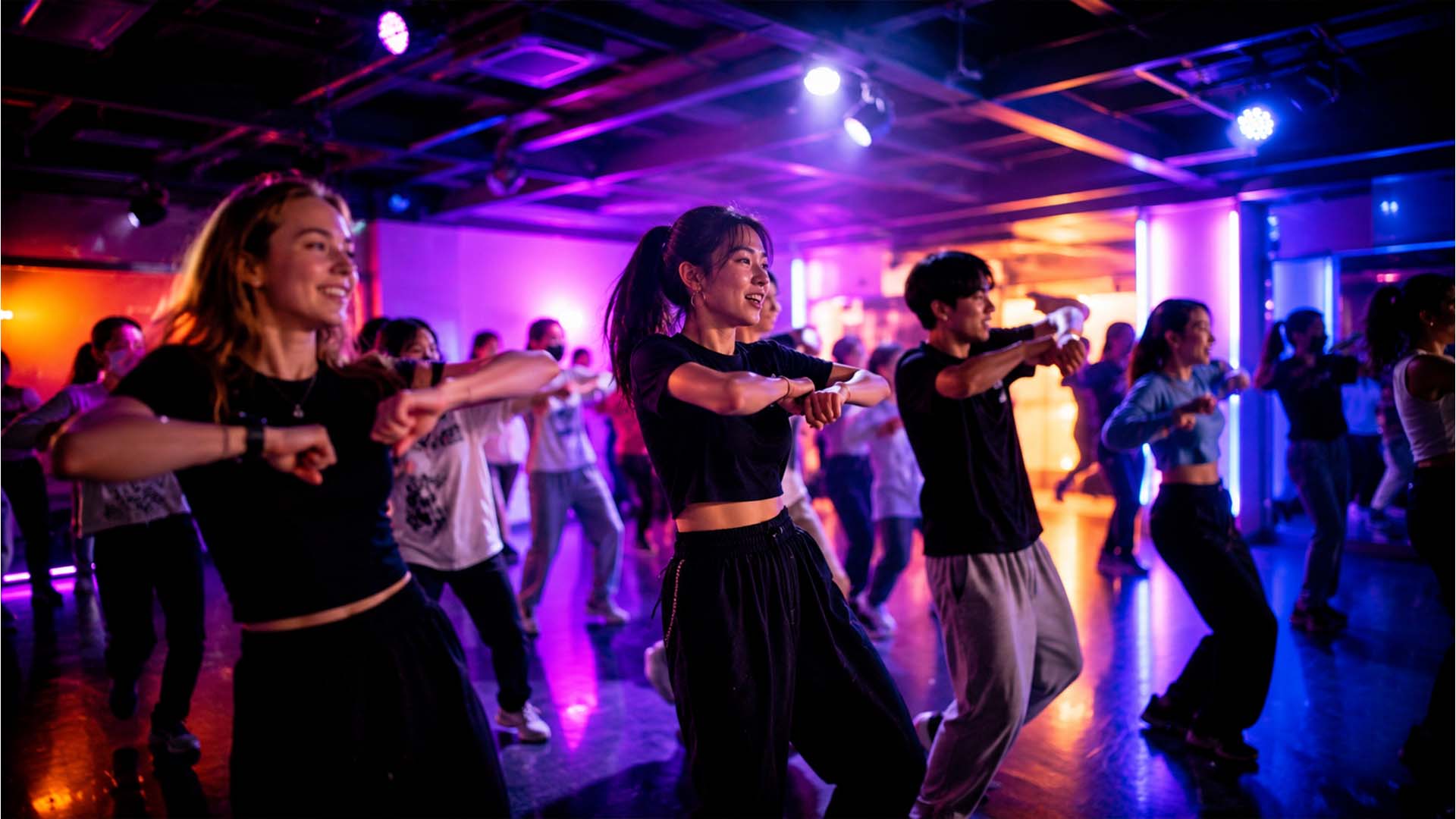
K-pop is one of the most fascinating cultural and economic phenomena of the twenty-first century. In the space of two decades, a national music scene built around an industrial idol system became a globe-spanning cultural force — generating multibillion-dollar revenues, mobilizing transnational fan armies, and reshaping how the world thinks about cultural export. This course is a serious, critical, and current study of K-pop and the broader Korean Wave (Hallyu) of which it is part.
Set in Seoul — where the major agencies (HYBE, SM, JYP, YG) operate and where K-pop is daily lived reality — the course gives students both the analytical tools and the on-the-ground exposure to understand K-pop as creative practice, industrial system, cultural diplomacy, fan economy, and global media phenomenon. The course is open to students from any discipline; no prior background in music, media studies, or Korean studies is assumed.
Aligned with the UN Sustainable Development Goals
While not a sustainability course per se, K-pop and Hallyu engage with several SDGs — SDG 5 (Gender Equality, through the lens of representation), SDG 8 (Decent Work, given labor concerns in the idol system), SDG 10 (Reduced Inequalities), and SDG 17 (Partnerships for the Goals, given cultural diplomacy).
Key Topics
Learning Objectives
By the end of this course, students will be able to:
-
Describe the K-pop industrial system — agency structure, trainee development, debut logic, and the economic model of the Korean music industry.
Assessment: Assessment: Industry analysis paper.
-
Analyze K-pop musical, visual, and choreographic practice using media-studies and cultural-studies frameworks.
Assessment: Assessment: Close-reading of a chosen K-pop work.
-
Evaluate K-pop fandom as a transnational cultural and economic phenomenon, including platform dynamics, fan labor, and community formation.
Assessment: Assessment: Fandom case study.
-
Engage critically with the controversies surrounding K-pop — labor practices, gender, mental health, and the politics of representation.
Assessment: Assessment: Critical essay on a chosen controversy.
-
Situate K-pop within the broader Korean Wave and articulate how Korean cultural export has reshaped global cultural flows.
Assessment: Assessment: Final research paper and presentation.
Course Format and Assessment Methods
Total grade is composed of the following weighted components:
Course Outline
The course is organized into the following sessions, which may be combined or expanded depending on summer vs. semester format.
-
Why Take K-pop SeriouslyCourse framing: K-pop as a worthy object of academic study, and how to read it.
-
Origins: From Seo Taiji to First-Generation K-popThe 1990s music revolution and the formative agencies.
-
The K-pop Industrial SystemHow agencies recruit, train, debut, and manage idol groups — and the global rarity of this model.
-
The K-pop SoundMusical conventions across five generations, with close listening across eras.
-
Choreography and the BodyK-pop dance as practice, signature, and discipline.
-
The Music Video as Art FormVisual conventions, narrative structures, world-building, and the major directors of the genre.
-
Fan Culture I: How Fandoms WorkARMY, BLINK, ONCE — fandom structures, fan labor, and the sociology of transnational K-pop communities.
-
Fan Culture II: The Fandom EconomyPlatforms (Weverse, Bubble, Lysn), merchandise, voting, streaming, and the economics of contemporary fandom.
-
BTS and the Global BreakthroughHow BTS became the first K-pop act to dominate the global pop conversation — and what their breakthrough meant.
-
BLACKPINK and the Fourth GenerationThe fourth-generation expansion, the rise of girl groups, and the contemporary K-pop landscape.
-
Gender in K-popRepresentation, the politics of beauty standards, and the gendered division of K-pop labor.
-
Critical PerspectivesLabor controversies, mental health and suicide in the idol system, parasocial dynamics, and toxic fandom.
-
Hallyu Beyond MusicK-drama, K-film, K-beauty, K-food — the broader Korean Wave.
-
Capstone PresentationsFinal research-paper presentations.
Field Visits and Guest Speakers
Seoul is the city as classroom. Course-related field components vary by term and availability, but examples include:
- Visit to HYBE Insight (BTS company) and SM Town COEX Artium where access permits.
- Studio visit to a Korean choreography or training facility.
- Attendance at a music recording or broadcast (Mnet, MBC, KBS where schedules align).
- Guided exploration of Hongdae's independent music scene as a counterpoint to mainstream K-pop.
- Guest lecture from a Korean music journalist, K-pop researcher, or industry practitioner.
- Visit to a Korean fan-merchandise district (Myeongdong or COEX) with observation prompts.
Readings & Resources
Selected readings and resources for this course. Full syllabus and reading list provided at enrollment.
Books
Jin, Dal Yong. New Korean Wave: Transnational Cultural Power in the Age of Social Media. Urbana: University of Illinois Press, 2016.
Kim, Suk-Young. K-pop Live: Fans, Idols, and Multimedia Performance. Stanford: Stanford University Press, 2018.
Lie, John. K-pop: Popular Music, Cultural Amnesia, and Economic Innovation in South Korea. Berkeley: University of California Press, 2015.
Oh, Ingyu. K-pop: The International Rise of the Korean Music Industry. Routledge, 2014.
Park, Gil-Sung. Manufacturing Creativity: Production, Performance, and Dissemination of K-pop. Korea Journal, 2013.
Yoon, Tae-Jin, and Dal Yong Jin, eds. The Korean Wave: Evolution, Fandom, and Transnationality. Lexington Books, 2017.
Films and Recordings
BTS. Discography and selected music videos, especially "Dynamite," "Spring Day," and "Black Swan."
BLACKPINK. "How You Like That" and "Pink Venom" music videos.
Hwang, Hee-cheol, dir. 2018. Bring the Soul: The Movie. Documentary on BTS.
NewJeans. ADOR-produced visuals (2022–2024).
Various. Mnet's Show Me the Money and Produce series — selected episodes.
Articles and Reports
Choi, JungBong. 2015. "Hallyu and Cultural Translation." International Journal of Cultural Studies.
Korea Creative Content Agency. 2024. Korean Content Industry Annual Report.
Lee, Hye-Kyung. 2015. "Cultural Policy in South Korea: Making a New Patron State." International Journal of Cultural Policy.
Lie, John. 2012. "What Is the K in K-pop? South Korean Popular Music, the Culture Industry, and National Identity." Korea Observer.
Oh, Chuyun. 2024. "Hallyu 5.0: Korean Wave in the Streaming Era." Asian Communication Research.