




Kindness as a habit, not just a random act!
Kindness is good for us!
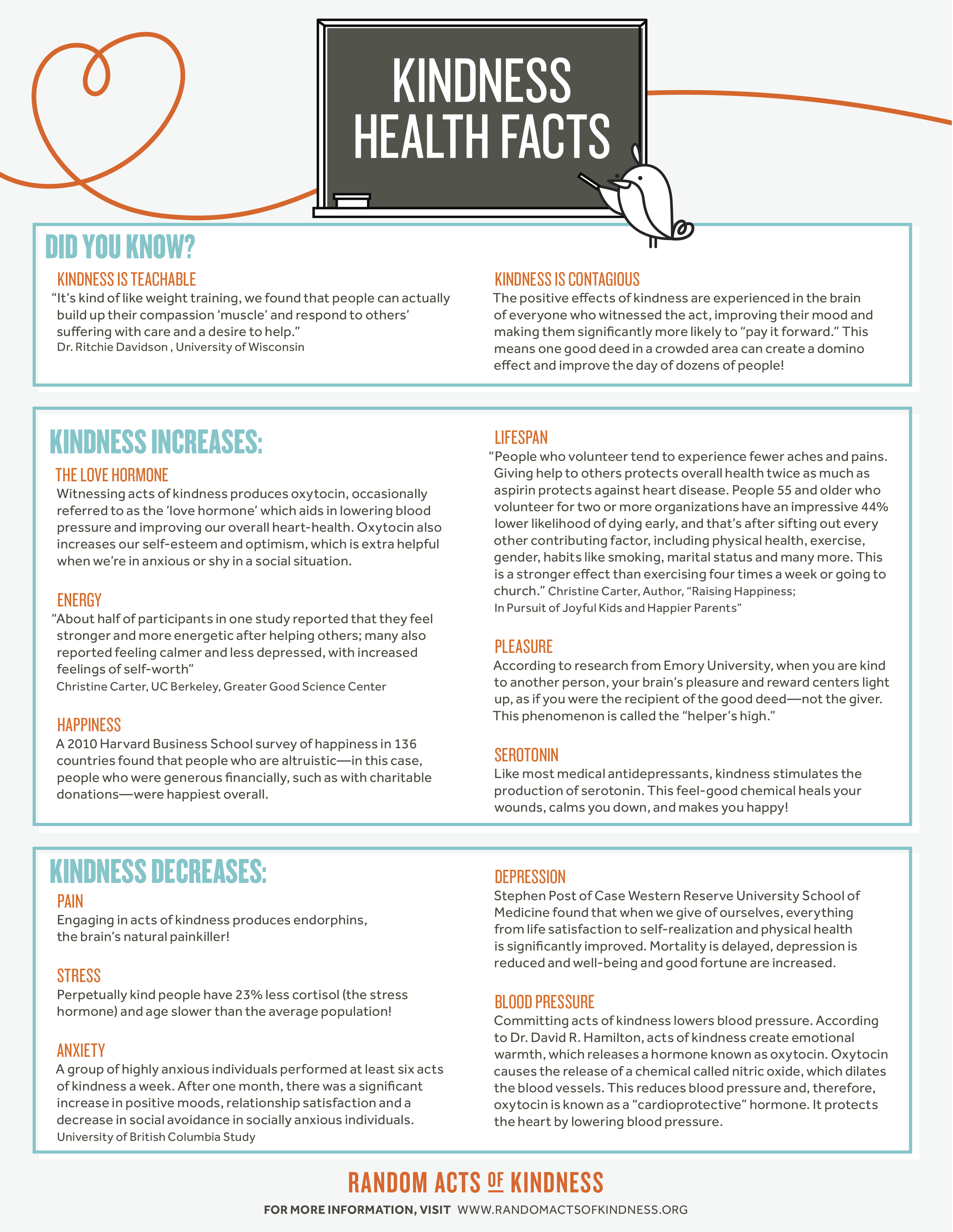
How would you like to be healthier, happier, and younger at no cost? All you have to do…is be kind! Research has shown that kindness stimulates the production of the “happy chemicals” in our brains, leading to health and happiness. These “happy chemicals” are:
- SEROTONIN: Kindness releases serotonin, which heals your wounds, calms your mind and makes you happy.
- OXYTOCIN: Kindness stimulates the production of oxytocin, the “love hormone”. Oxytocin promotes social bonding, has a calming effect, increases trust and generosity, strengthens the immune system, reduces blood pressure and – get this – even boosts virility!
- ENDORPHINS: Engaging in acts of kindness produces endorphins, the brain’s natural painkiller! This is why volunteers tend to experience fewer aches and pains.
- DOPAMINE: When you are kind to another person, it triggers the brain’s pleasure and reward center that is responsible for dopamine-mediated euphoria. This phenomenon (called the “helper’s high”) leads to people feeling stronger and more energetic, feeling calmer and less depressed, with increased feelings of self-worth.
Perpetually kind people also have 23% less cortisol (the stress hormone) and age slower than the average population!
Wow – with all these benefits of kindness, why leave it to random chance? While we’re not opposed to random acts of kindness, we encourage making kindness an intentional habit!
Making kindness a habit
Dr John-Tyler Binfet of University of British Columbia suggests the following steps to make kindness an intentional habit:
- Create a recipient bank of people or organizations in need of receiving kindness or who would appreciate having something kind done for them.
- Plan the act: Who will you be kind to? How? When? Where? Will you do it anonymously? What might the recipient’s reaction be?
- Execute the act
- Reflect upon the kind acts you’ve done. In addition to perspective-taking and introspection, this reflection is shown to further increase your levels of happiness and gratitude
I know…some of you might be thinking if being kind because it is good for you will make you selfish. Actually, it is not. Research by Berkeley psychologist and founder of the Greater Good Science Centre, Dr. Dacher Keltner finds that we are hard-wired to be kind. So kindness to others is NOT selfishness…it is enlightened self-interest!
So go ahead and embrace kindness and make it a habit – it is not only good for others, it is also great for you!
As Aristotle would say: We are what we do repeatedly. Kindness, therefore, is not a random act but a habit!
Subscribe To Our Weekly Newsletter
Recent Post

The Internship Abroad Resume: How to Turn a Placement Into Interviews

Global Internship Programs for Universities

How to Get an Internship Abroad

Categories
Recent Blog

The Internship Abroad Resume: How to Turn a Placement Into Interviews
This is Part 4 of The Internship Edge; the handout. When an intern comes home, this is the piece your office or career center gives them, because the placement was only half the work. The other half is the telling.

Global Internship Programs for Universities
Global internship programs for universities — without building a placement office. The design framework, the objection-killers, and the 2027–28 pilot path.

How to Get an Internship Abroad
This is Part 2 of The Internship Edge, written for the study abroad and career offices that field the question, and built to be forwarded. When the next student asks, “how do I actually do an internship abroad?”, this is the link you send.

The Internship Signal: Why Study Abroad Internships Are the 2027–28 Opportunity
Student interest in study abroad internships jumped 50% in a year while under half of US colleges offer them. Why the internship abroad is the 2027–28 opportunity.