

K-movie and Hallyu
Seoul, South Korea · A National Cinema Becomes a Global Force
Course Description
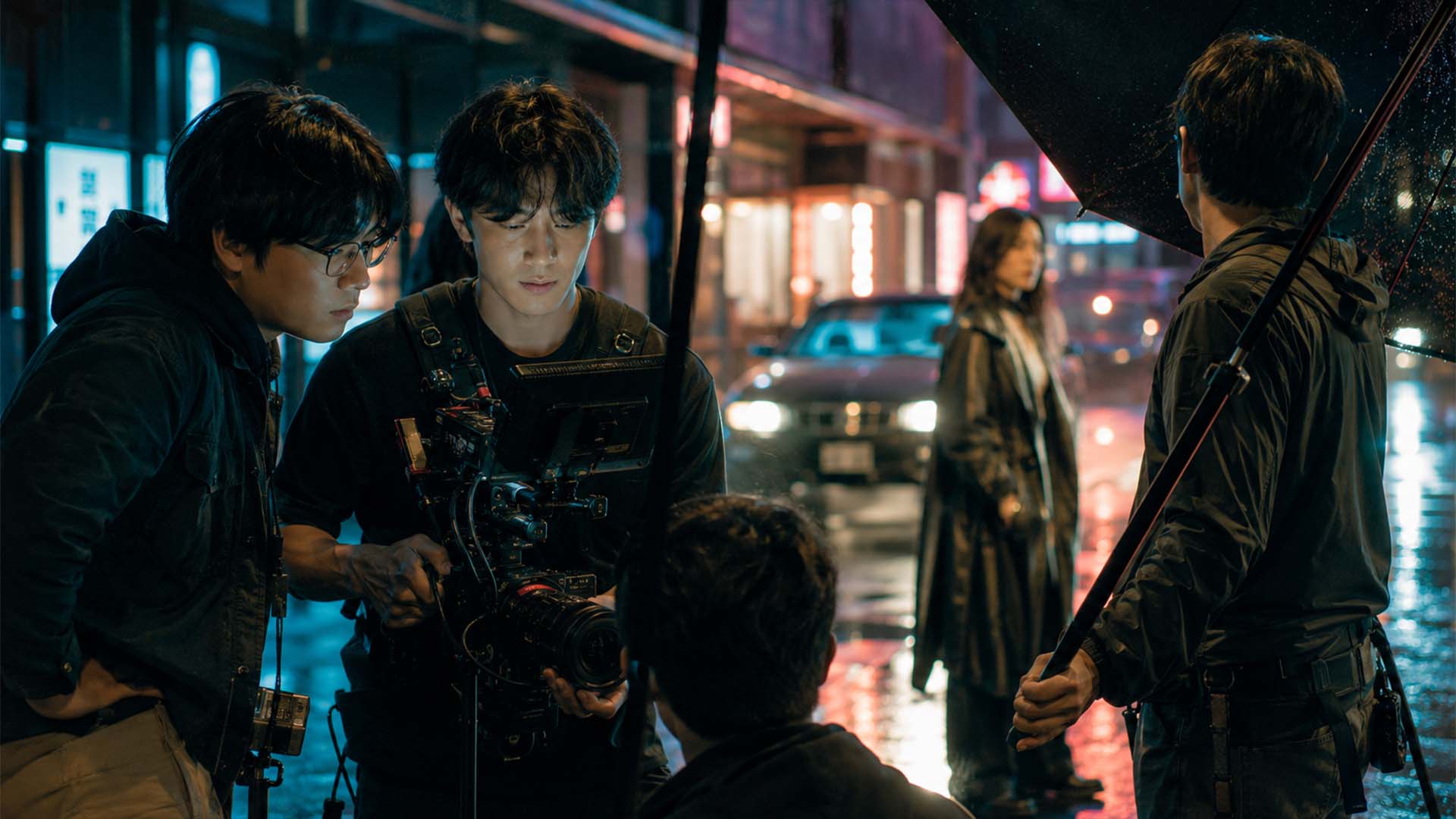
When Bong Joon-ho's Parasite won four Academy Awards in 2020, it became the first non-English-language film to win Best Picture in Oscar history. When Squid Game debuted on Netflix in 2021, it became the platform's most-watched series ever. These are not accidents. They are the visible peaks of a Korean cinema and television industry that has been quietly building creative, technical, and narrative excellence for three decades.
This course examines Korean cinema and television as art, industry, and cultural diplomacy. Tracing the arc from the Korean New Wave of the 1990s through the global breakthroughs of the 2010s–2020s, the course gives students the analytical tools to read Korean visual storytelling — and the broader Korean Wave (Hallyu) of which it is part — with depth and discrimination. Set in Seoul, the city where most Korean film and television is shot and produced, the course combines academic analysis with direct industry exposure.
Aligned with the UN Sustainable Development Goals
This course engages with SDG 4 (Quality Education), SDG 5 (Gender Equality, through representation analysis), SDG 8 (Decent Work, through labor questions in the Korean film industry), SDG 10 (Reduced Inequalities), and SDG 17 (Partnerships for the Goals).
Key Topics
Learning Objectives
By the end of this course, students will be able to:
-
Identify the major movements, auteurs, and turning points of Korean cinema since 1990.
Assessment: Assessment: Mapping exercise: timeline-and-essay.
-
Analyze a Korean film or television series using formal, narrative, and cultural frameworks.
Assessment: Assessment: Close reading of a chosen work.
-
Evaluate the structural conditions — industrial, regulatory, technological — that made the Korean cinematic ascent possible.
Assessment: Assessment: Industry analysis paper.
-
Engage critically with questions of gender, class, and representation in Korean visual storytelling.
Assessment: Assessment: Critical essay on representation.
-
Situate Korean cinema and television within the broader Hallyu phenomenon and global media flows.
Assessment: Assessment: Final research paper and presentation.
Course Format and Assessment Methods
Total grade is composed of the following weighted components:
Course Outline
The course is organized into the following sessions, which may be combined or expanded depending on summer vs. semester format.
-
Why Korean Cinema NowCourse framing: how Korean cinema became a global force, and what it offers students of media.
-
Before the New WaveKorean cinema from the colonial era through the 1980s — the long backstory.
-
The Korean New WaveThe 1990s–early 2000s explosion: Im Kwon-taek, Hong Sang-soo, Park Chan-wook, Lee Chang-dong, Bong Joon-ho.
-
Park Chan-wook and the Vengeance TrilogyClose study of Oldboy as world cinema — and the international breakthrough it represented.
-
Bong Joon-hoBong's filmography from Memories of Murder through Parasite — and the social texture of his work.
-
Genre and the Korean MainstreamKorean thrillers, melodramas, and action films — the commercial backbone of the Korean industry.
-
The Korean Studio SystemCJ ENM, Showbox, NEW, Lotte Entertainment — the corporate structure of Korean film.
-
The Television RevolutionThe shift from network to cable to streaming, and the rise of premium Korean drama.
-
Squid Game and the Netflix MomentHow Korean storytelling went truly global — and what it means for the next decade.
-
K-drama as Cultural FormNarrative conventions, emotional register, and the global audience for Korean drama.
-
Gender and Class in Korean Visual StorytellingReading Korean film and television for what it says about Korean society — and what it deliberately leaves out.
-
The Korean Film Festival CircuitCannes, Berlin, Venice, and the strategic curation of Korean cinema for global audiences.
-
The Future of Korean Visual StorytellingStreaming consolidation, AI in production, and what Korean creatives are saying about what comes next.
-
Capstone PresentationsFinal research-paper presentations.
Field Visits and Guest Speakers
Seoul is the city as classroom. Course-related field components vary by term and availability, but examples include:
- Studio tour at a major Korean film or TV production facility (Dexter Studios, MBC, or JTBC).
- Visit to the Korean Film Archive in Sangam.
- Walking tour of Seoul filming locations from major Korean films and series.
- Guest lecture from a Korean film critic, producer, or actor.
- Attendance at a screening or talk at the Korean Film Council or a Seoul independent cinema.
- Day trip to Busan (semester-length) for the Korean film archive and the Busan International Film Festival sites.
Readings & Resources
Selected readings and resources for this course. Full syllabus and reading list provided at enrollment.
Books
Choi, Jinhee. The South Korean Film Renaissance: Local Hitmakers, Global Provocateurs. Wesleyan University Press, 2010.
Gateward, Frances, ed. Seoul Searching: Culture and Identity in Contemporary Korean Cinema. SUNY Press, 2007.
Joo, Jeongsuk. South Korean Television Drama: Identity and the Past. Routledge, 2020.
Klein, Christina. Cold War Cosmopolitanism: Period Style in 1950s Korean Cinema. University of California Press, 2020.
Lee, Hyangjin. Contemporary Korean Cinema: Identity, Culture, Politics. Manchester University Press, 2001.
Yecies, Brian, and Aegyung Shim. The Changing Face of Korean Cinema: 1960 to 2015. Routledge, 2016.
Films and Recordings
Bong, Joon-ho, dir. 2003. Memories of Murder.
Bong, Joon-ho, dir. 2019. Parasite.
Hwang, Dong-hyuk, dir. 2021. Squid Game. Netflix.
Lee, Chang-dong, dir. 2010. Poetry.
Park, Chan-wook, dir. 2003. Oldboy.
Park, Chan-wook, dir. 2016. The Handmaiden.
Articles and Reports
Choi, JungBong. 2015. "Hallyu and Cultural Translation." International Journal of Cultural Studies.
Jin, Dal Yong. 2019. "Snack Culture's Dream of Big Screen Culture: K-content in Streaming." International Journal of Communication.
Klein, Christina. 2008. "Why American Studies Needs to Think about Korean Cinema." American Quarterly.
Korea Creative Content Agency. 2024. Korean Content Industry Annual Report.
Lee, Sangjoon. 2020. "The Korean Wave: From the Sewing Machine to the Smartphone." Asian Communication Research.
Paquet, Darcy. 2024. Korean Cinema Today. KoBiz / Korean Film Council.