

Water Scarcity & Sustainable Rural Development in India
- Delhi-NCR, Agra, Jaipur & Alwar, India
Sustainable Development Goals in Action

Program Overview
India — home to over 1.4 billion people and one of the world’s fastest-growing major economies — is at the frontline of the global water crisis. Nearly 54% of the country faces high to extremely high-water stress, with rural communities in Delhi-NCR, Haryana, and Rajasthan disproportionately affected by groundwater depletion, contamination, and climate volatility. Addressing these challenges requires innovative, community-driven approaches to water management and sustainable rural development.
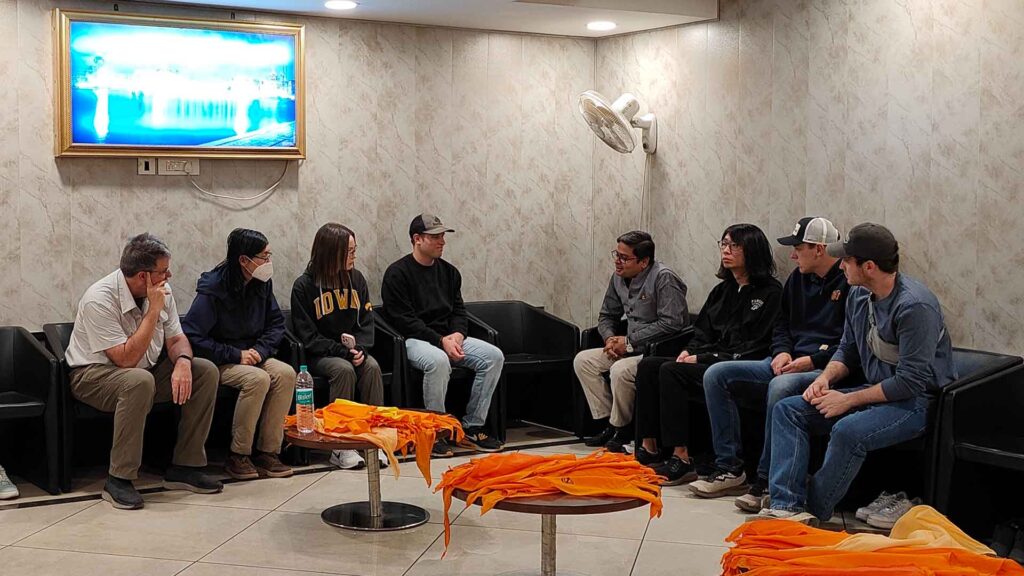
This 16-day program placed students at the center of that conversation. Delivered in partnership with a leading rural development foundation, it combined urban policy engagement with rural fieldwork — students moved between Delhi-NCR, the villages of Mewat and Alwar, and the heritage cities of Agra and Jaipur to engage directly with community-based solutions to water and food security challenges.
Through hands-on activities such as water sample testing, groundwater-level measurement, and analysis of water quality metrics alongside rural practitioners, students developed a deep understanding of water management practices and community-driven innovations aimed at enhancing rural livelihoods. Cultural immersions at UNESCO World Heritage sites, ancient stepwells, religious monuments, and vibrant markets provided context for how centuries-old knowledge informs contemporary sustainability.
Key Program Elements
Gain key insights into India’s water, agriculture, and sustainable rural development.
- Engage with a rural development partner foundation in Haryana and Rajasthan to understand community-based sustainable development models at the intersection of water, agriculture, and livelihoods.
- Conduct hands-on fieldwork — water sample testing, groundwater-level measurement, and water quality analysis — alongside rural development professionals.
- Interact with national research institutes, rural development think-tanks, environmental policy bodies, and wildlife conservation NGOs working on the frontlines of India’s sustainability challenges.
- Examine how ancient water-harvesting structures like the Chand Baori step-well, Amber Fort’s rainwater systems, and traditional village tanks continue to inform modern resilience strategies.
Build skills to engage with water, policy, and sustainable development.
- Develop analytical skills by engaging with NGOs, foundations, research institutes, and village communities addressing water scarcity and rural development challenges.
- Reflect on the tensions between development, agriculture, heritage, and resource stewardship in a rapidly transforming economy.
- Apply cross-cultural, policy, and field-research skills directly relevant to careers in international development, public policy, environmental sustainability, and civil engineering.
- Understand how traditional ecological knowledge, community governance, and indigenous water management systems shape contemporary sustainability movements.
Hands-on Experience of Indian Culture and Heritage
- Explore UNESCO World Heritage sites including the Taj Mahal, Qutub complex, and Agra Fort — understanding how Mughal and Rajput architecture encoded knowledge of climate, water, and community.
- Visit the 1,000-year-old Chand Baori step-well and Amber Fort’s rainwater systems — ancient engineering that still inspires modern water conservation.
- Volunteer at a major Sikh community kitchen (langar) that serves 40,000 free meals every day, regardless of caste, creed, or color.
- Experience the contrast between Delhi-NCR’s urban energy, the rural quiet of Mewat and Alwar, and the royal heritage of Agra and Jaipur.
Which UN SDGs does this program advance?
SDG 2: Zero Hunger
- Students examine food security and agricultural sustainability through engagement with a rural development partner foundation. They explore farming practices in Mewat and Alwar, innovative approaches to strengthening rural food systems, and Indian policy frameworks for addressing food insecurity in water-stressed regions.
SDG 3: Good Health & Well-being
- Students investigate the connections between water quality, food systems, and community health outcomes in rural Indian villages. They examine nutritional challenges in resource-constrained environments and explore how traditional agricultural knowledge supports health and wellbeing in climate-vulnerable communities.
SDG 5: Gender Equality
- Students engage with women-led agricultural initiatives in rural communities and examine how gender equality influences water stewardship and community resilience. They analyse how addressing gender inequalities contributes to sustainable food and water security solutions.
SDG 6: Clean Water & Sanitation
- Students conduct hands-on water-quality testing, measure groundwater levels, and study community-driven water management solutions in one of India’s most water-stressed regions. They explore traditional and contemporary approaches to water conservation and equitable water access.
SDG 11: Sustainable Cities & Communities
- Students study the contrast between urban and rural development in India, examining sustainable community planning, traditional architecture, and ancient water harvesting systems such as the Chand Baori step-well — exploring how heritage informs contemporary resilient community design.
SDG 13: Climate Action
- Students explore climate-smart agriculture at partner foundation field sites, examining approaches to climate adaptation in traditional farming practices. They analyse policy frameworks for climate-resilient agricultural production in one of the world’s most climate-vulnerable regions.
SDG 17: Partnerships for the Goals
- Students observe partnerships between educational institutions, NGOs, research institutes, and community organization’s — and study collaborations between universities, government bodies, and grassroots actors working on water and rural development challenges.
Program Highlights
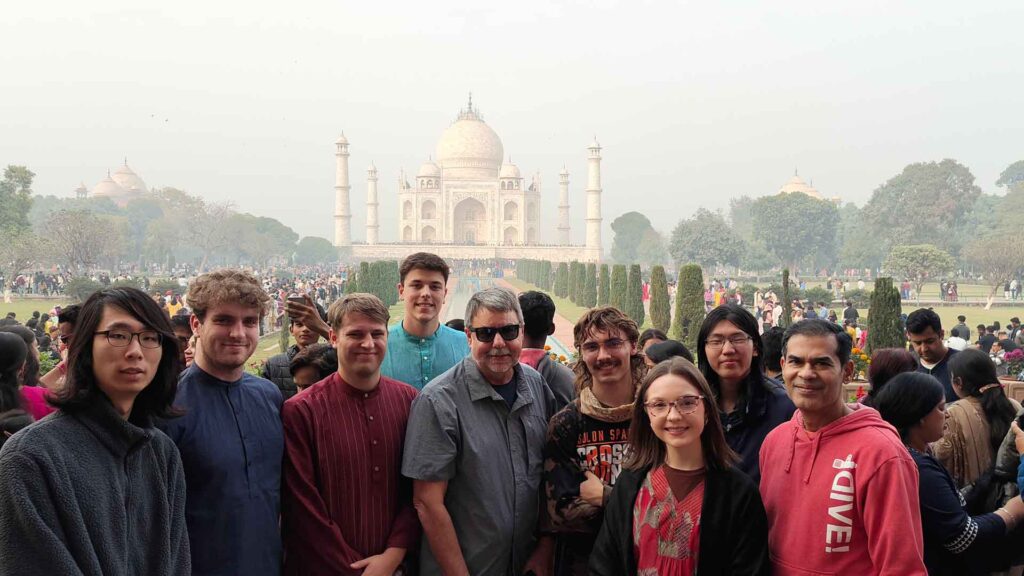
Taj Mahal (Agra)
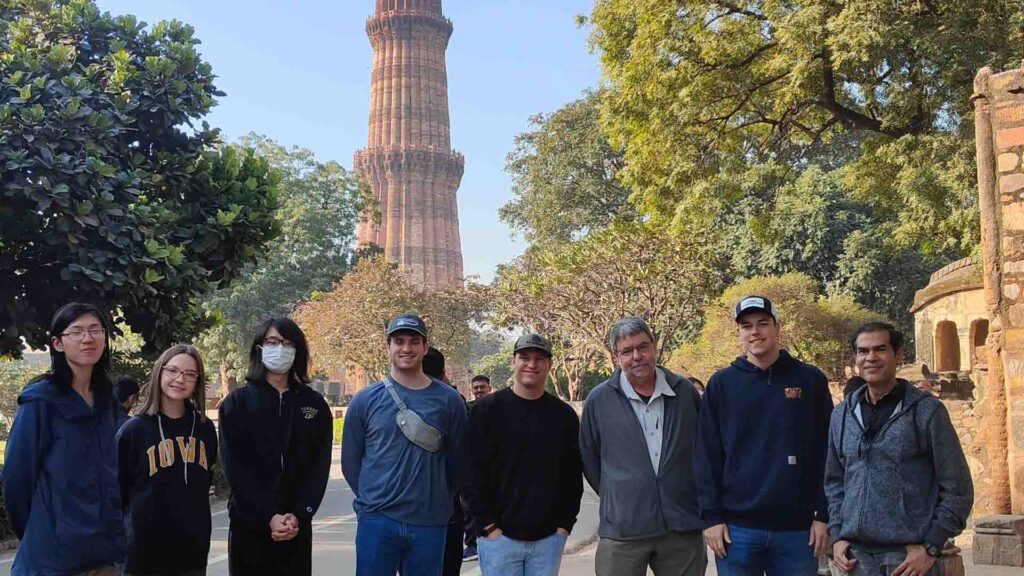
Qutub Complex & Lotus Temple
Langar Community Kitchen Service
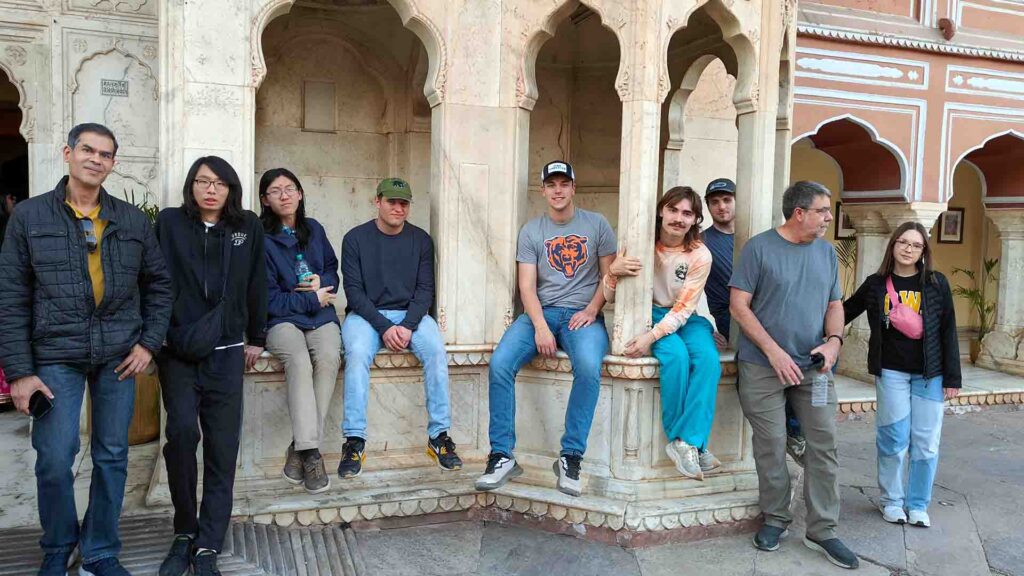
Amber Fort & Hawa Mahal
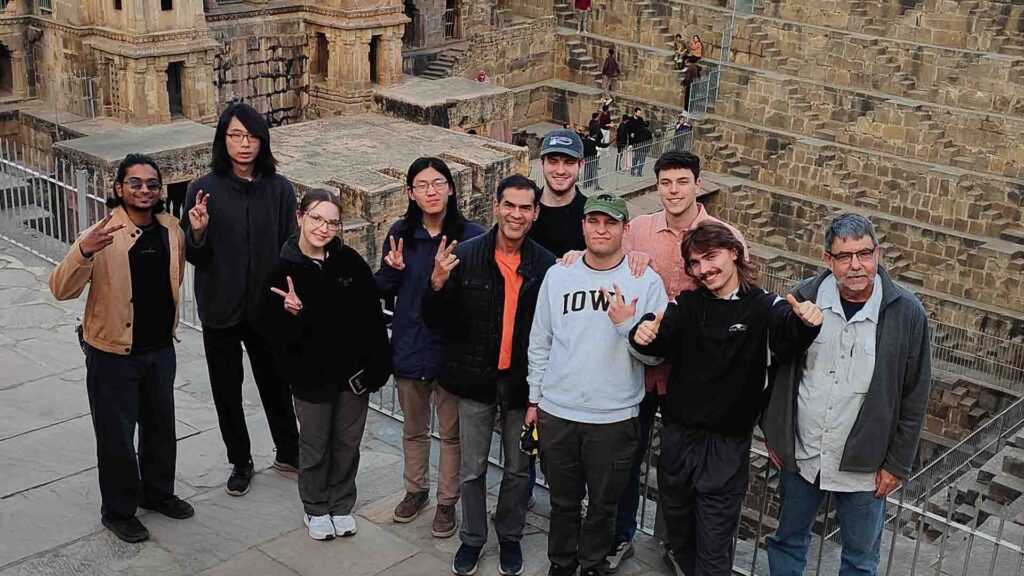
Chand Baori Step-Well
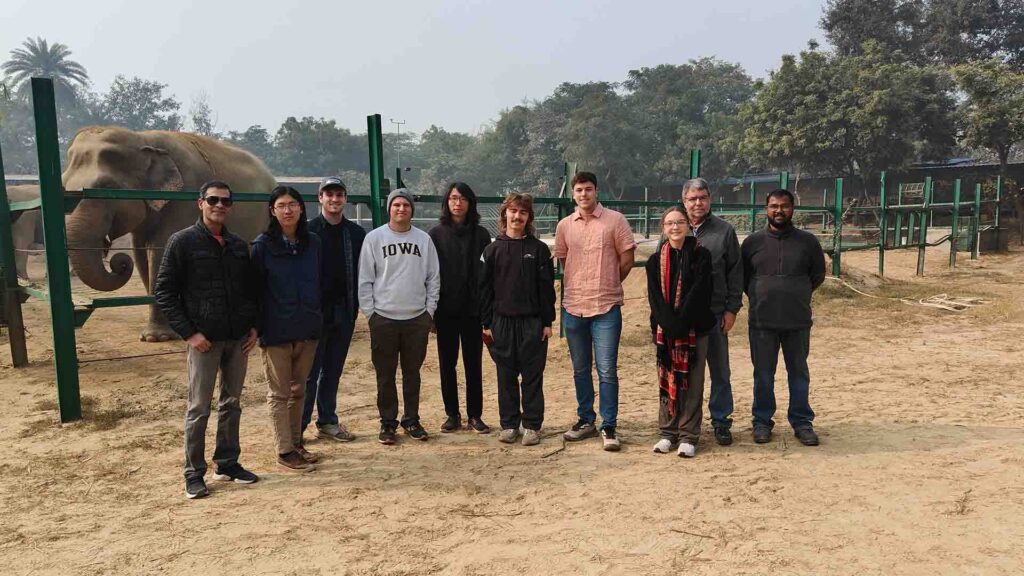
Wildlife Conservation NGO Visit
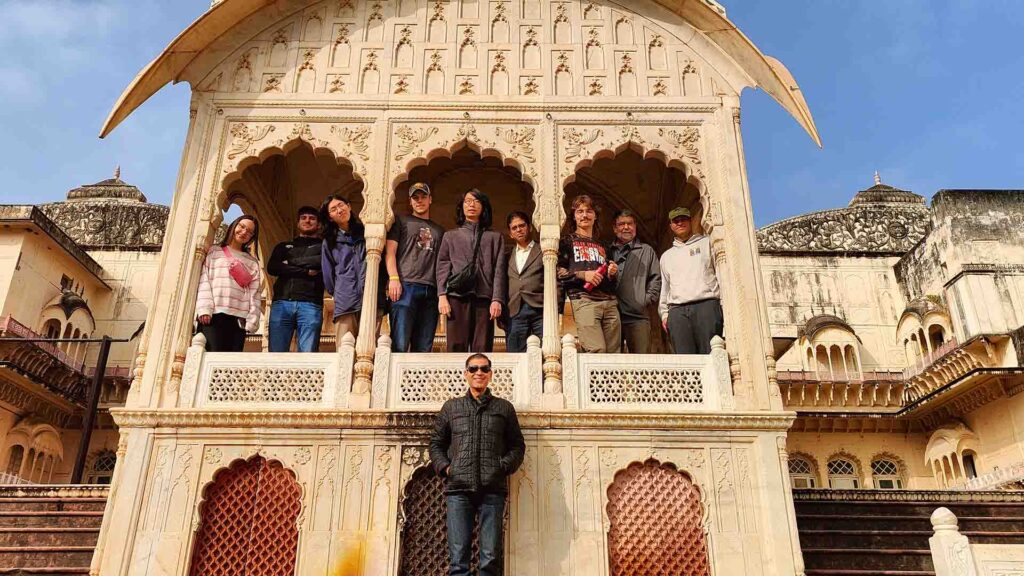
Mewat Rural Village Visit
What will you learn?
(Learning outcomes)
Water Systems & Policy Analysis
Understand how India’s water stewardship policies translate into practice — examining groundwater governance, rural development frameworks, and the gap between policy and ground reality in water-stressed regions.
Skills Developed:
Policy Analysis, Critical Thinking
Field Research & Hands-on Fieldwork
Build the ability to conduct meaningful field research — water sample testing, groundwater measurement, and community interviews — in collaboration with a rural development foundation and its village partners.
Skills Developed:
Field Research, Data Collection, Systems Thinking
Cross-Cultural & Community Engagement
Build the ability to engage meaningfully with diverse communities — farmers, researchers, activists, NGO leaders, and heritage communities — across urban, rural, and historic India.
Skills Developed:
Cultural Sensitivity, Community Engagement
Sustainable Development & Global Citizenship
Connect water scarcity to broader structures of climate, inequality, and heritage — and reflect on your own role as a global citizen committed to sustainable development.
Skills Developed:
Sustainability Literacy, Reflective Practice
Sample Itinerary
Day 1: Arrival in Delhi-NCR
- Arrive at Delhi International Airport
- Individual/group airport transfers to hotel in Gurugram
- Rest and informal meet-and-greet with faculty
Day 2: Orientation & Welcome with Partner Foundation
- Morning: Rest and recovery
- Afternoon: Orientation & safety briefing
- Afternoon: Introductory visit to partner rural development foundation
- Evening: Welcome Dinner
Day 3: Mewat Field Day — Water Sampling
- Full day in the rural Mewat region with the partner foundation
- Hands-on water sample collection and testing for quality parameters
- Community conversations with villagers on everyday water access
Day 4: Heritage Delhi — Monuments, Faith & Service
- Full-day guided cultural tour: UNESCO World Heritage Minaret and tomb complex
- Visit to an architecturally iconic Bahá'í House of Worship
- Volunteer service at a major Sikh community kitchen serving 40,000 meals daily
Day 5: Field & Office Day with Partner Foundation
- Office-based sessions on the partner foundation's programmatic approach
- Supporting fieldwork activities in the region
Day 6: Delhi-NCR → Agra · Wildlife Conservation & Heritage
- Morning: Depart for Agra by coach
- Mid-morning stops at a leading wildlife rescue and rehabilitation NGO
- Afternoon: Guided visit to the UNESCO-listed Agra Fort
- Evening: Check-in to 4-star hotel in Agra
Day 7: Taj Mahal & Ancient Step-Well · On to Jaipur
- Early morning: Sunrise visit to the Taj Mahal
- Transfer to Jaipur by coach with a stop at the 1,000-year-old Chand Baori step-well
- Lunch enroute
- Evening: Guided bazaar experience in Jaipur
- Late evening: Check-in to 4-star hotel in Jaipur
Day 8: Jaipur — Palaces, Observatory & Forts
- Morning: Guided tour of City Palace, Jantar Mantar (world's largest open-air observatory)
- Photo stop at Hawa Mahal
- Afternoon: Guided tour of Amber Fort, including its traditional rainwater harvesting systems
- Evening: Free time
Day 9: Jaipur → Alwar · Rajasthan Heritage
- Morning: Transfer to Alwar, with lunch on the way
- Late afternoon: Visit a 19th-century royal cenotaph beside a serene lake
- Overnight in 3-star hotel in Alwar
Day 10: Alwar Field Site — Rural Development in Practice
- Full-day site visit in rural Alwar with the partner foundation
- Understanding how water, agriculture, and livelihoods converge at the village level
- Evening: Hotel check-in and group celebration
Day 11: Alwar Field Site — Deep Dive
- Second full-day site visit in rural Alwar
- Continuing fieldwork and deeper stakeholder conversations
- Supporting community-driven water and agriculture initiatives
Day 12: Alwar → Delhi-NCR · Return to the Capital
- Morning: Transfer back to Delhi-NCR
- Afternoon: Hotel check-in in Gurugram
- Evening: Free time to rest and journal
Day 13: Presentation Preparation Day
- Full day of team-based work synthesizing field observations, water data, and community insights
- Preparation of final project presentations for the partner foundation
Day 14: Free Day · Explore Delhi-NCR
- Unstructured day for students to explore Delhi-NCR independently
- Museums, markets, neighborhoods, or rest
Day 15: Final Presentations & Leading Technical Institute
- Morning: Final project presentations at the partner foundation
- Late afternoon: Visit to a leading Indian technical institute's civil engineering department
- Engagement on sustainable water infrastructure research
- Evening: Farewell Dinner
Day 16: Reflections & Departure
- Morning: Closing reflections session at the partner foundation
- Afternoon: Individual/group airport transfers for onward journeys
*Please note that the itinerary is a sample guide and is subject to possible modifications.
How much does the India program cost?
- *COST: Starting from US$1,990 / PERSON
(Twin-sharing basis; based on group size — see table below)
*Please note that the cost of our programs may vary depending upon several factors, including but not limited to the size of the group, program inclusions, the number of program days and more. Kindly contact us for a customized quote that suits your specific requirements.
| Group Size | 8 participants | With 1 faculty/staff free | Single supplement |
|---|---|---|---|
| Cost per participant (twin-share) | US$1,990 | US$2,290 | US$310 |
What's Included
- Accommodation (bed & breakfast, Wi-Fi) for 15 nights
- 15 breakfasts, 11 lunches & 7 dinners
- Airport transfers & all in-country transport (private AC coach)
- 24×7 on-ground support by Authentica Program Manager
- Site visits & partner organization engagements
- Relevant lectures & guest expert sessions
- Community & cultural immersions
- Pre-departure orientation sessions
- Carbon offset ~2.5 tCO₂/participant via TerraBlu (certificates provided)
- Guided cultural tours by English-speaking professionals
- Tips for all guides and drivers
- All applicable taxes
What's Excluded
- International airfare to/from Delhi
- Airport taxes and departure levies
- Indian visa fees
- Personal travel insurance (strongly recommended)
- Personal expenses, shopping, and optional activities
- Meals not listed in the included meals schedule
FAQs About the Program
Contact Authentica or your university’s study abroad office to discuss whether a future cohort is being planned. If your institution is interested in running a similar custom program, Authentica will work with your faculty to co-design an itinerary aligned with your learning objectives and academic calendar.
This program was purpose-built around the academic theme of water scarcity and sustainable rural development, with every site visit and engagement designed to deliver on specific learning objectives. Students leave with policy analysis skills, hands-on field research experience, and a deep contextual understanding of water and rural development challenges in the Global South — directly relevant to careers in international development, environmental policy, sustainability, civil engineering, and social research.
Authentica collects dietary requirements from all participants in advance of the program. All dining venues are pre-vetted. This program included multiple vegetarian-friendly dining experiences, with all group meals offering both vegetarian and non-vegetarian options.
Students engaged with academics, NGO leaders, seed sovereignty advocates, community kitchen managers, and cultural institution staff across Bengaluru and Mysuru. These connections provide a foundation for ongoing engagement with food justice issues in India and the broader Asia-Pacific region.
Authentica maintains a comprehensive Health, Safety, and Security Framework covering destination risk analysis, real-time monitoring, vetted local partners, and emergency response protocols. A dedicated Authentica Program Manager accompanies the group throughout, providing 24×7 on-ground support. Authentica holds a General Liability Insurance Policy with Liberty (US$3M global coverage) and an Errors & Omissions policy (US$1M+).
Academic credit is awarded only by the home institution, not by Authentica, and credit policies vary from university to university. Check with your study abroad office or academic advisor to confirm whether a program qualifies for credit at your institution.
It suits students in environmental studies, development studies, engineering, public policy, geography, and related fields seeking real-world fieldwork.
Ready To Take Action?
If you are ready to take your study experience to new heights, kindly fill out the “Apply Now” form or submit your inquiry through the “Inquire Now” form. Rest assured, we will promptly reach out to you.
Need help? Contact us at info@authentica.com