
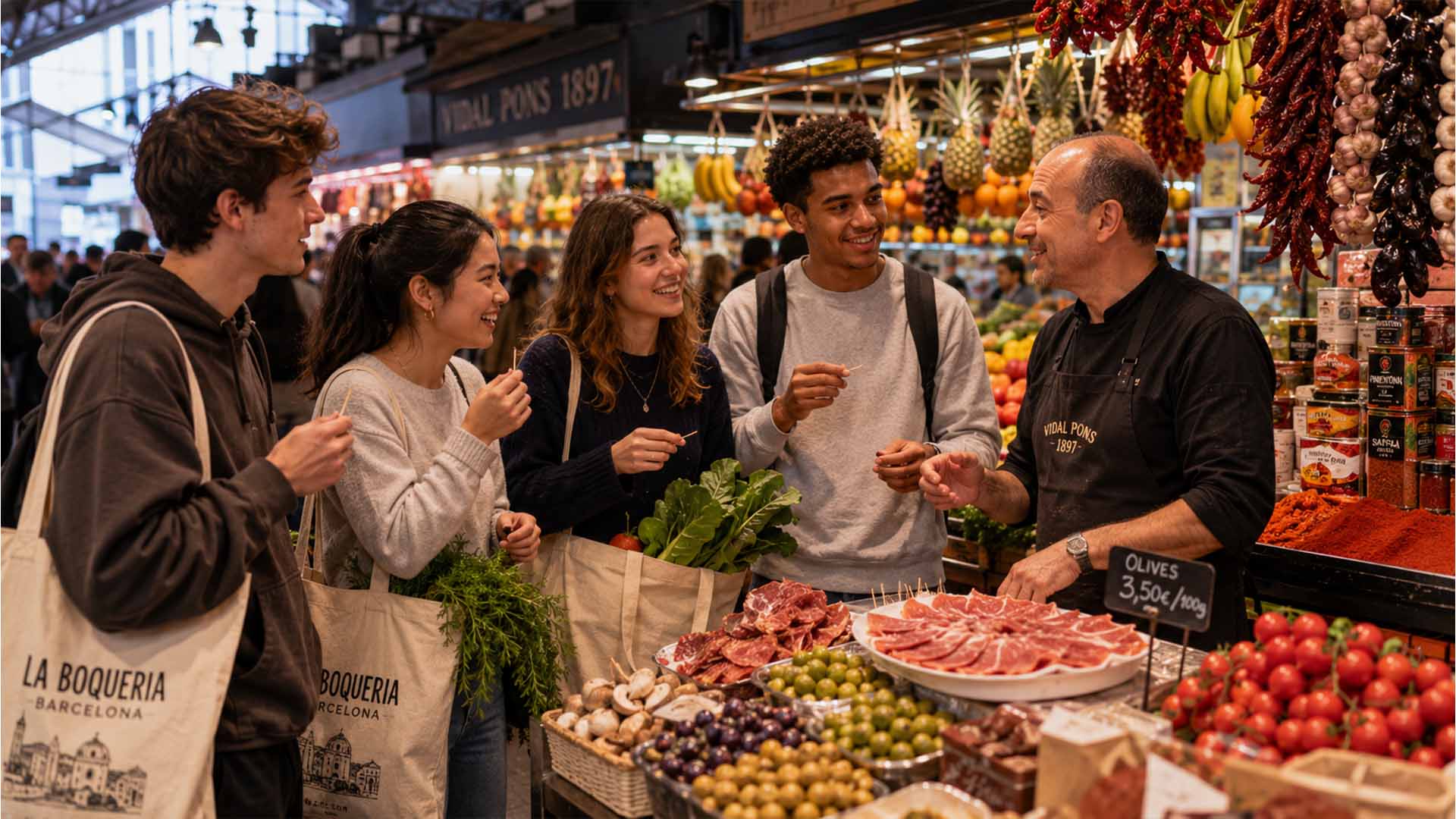
Barcelona, Spain โ€” host city for the Sustainability & Tradition in Culinary Culture course Barcelona, Spain ยท Mediterranean Foodways & Slow Food
Food Studies Elective

Sustainability & Tradition in Culinary Culture

โฑ Total Hours 45
๐ŸŽ“ Credits 3
๐Ÿ“ Location Barcelona, Spain
โœ“ Prerequisites None
๐Ÿท
Primary Discipline
Food Studies
Suggested Cross Listings Environmental Studies, European Studies, Anthropology
Total Hours 45
Credits 3
Prerequisites / Requirements None

Spain's culinary heritage is globally celebrated for its regional diversity, agricultural richness, and cultural symbolism. Yet this heritage is increasingly impacted by climate change, industrial food systems, and shifting consumption patterns. This course explores how Spain's gastronomic traditions both shape and are shaped by contemporary sustainability efforts.

Using Spain as a living classroom, students will investigate how regional foodwaysโ€”such as olive cultivation, seafood traditions, and local wine productionโ€”interact with social and ecological sustainability. Topics will include the preservation of food heritage, Slow Food practices, urban agriculture, food justice, and culinary tourism. Through field-based learning, cooking sessions, and engagement with producers and chefs, students will develop a critical and experiential understanding of what a sustainable food system means in the Spanish context.

UN Sustainable Development Goals Wheel
Aligned with 5 key UN Sustainable Development Goals

Spanish foodways serve as a living laboratory for the 2030 Agenda. The course most directly engages SDG 2 (Zero Hunger) through agricultural biodiversity and food security, SDG 12 (Responsible Consumption and Production) via ethical consumerism and the Mediterranean Diet, SDG 15 (Life on Land) through soil and seed conservation, SDG 8 (Decent Work and Economic Growth) for fair producer livelihoods, and SDG 11 (Sustainable Cities and Communities) through local food systems.

5 Key SDGs Addressed
SDG 2: Zero Hunger SDG 8: Decent Work and Economic Growth SDG 11: Sustainable Cities and Communities SDG 12: Responsible Consumption and Production SDG 15: Life on Land
History and development of culinary culture Sustainability, local economies, and food production The preservation of culinary traditions and regional cuisines Food policy and influences on global food movements Challenges and opportunities for traditional culinary culture in the modern world

By the end of this course, students will be able to:

1
Identify and explain key regional culinary traditions in Spain and their historical and environmental foundations.
Assessment: Quiz and regional cuisine presentation.
2
Analyze the relationship between culinary practices, local food economies, and sustainability principles.
Assessment: Case study and field report.
3
Evaluate Spanish food systems within broader global challenges such as climate change, globalization, and food security.
Assessment: Research paper on sustainability challenges in a Spanish food context.
4
Apply sustainability frameworks (e.g., Slow Food, Mediterranean Diet) to the analysis of food systems, consumption, and gastronomy.
Assessment: Group project with presentation.
5
Develop a personal framework for ethical food consumption, culinary identity, and social engagement through food.
Assessment: Reflective journal and final project.
20%
Class Participation and Discussion
Based on engagement with readings, site visits, discussions, and guest lectures.
All LOs
10%
Quiz on Spanish Food Traditions and Sustainability
A short quiz covering regional cuisines, food heritage, and sustainability frameworks.
LO 1
10%
Case Study Analysis
A 3-page written analysis of a sustainable food initiative or tradition in Spain.
LO 2
20%
Research Paper
A 10โ€“12-page critical essay analyzing a sustainability issue in Spain's food system (e.g., food policy, gastrotourism, agricultural resilience).
LO 3
20%
Fieldwork Reports
Two short (3-page) reports based on field visits, assessing sustainability in practice across production and consumption.
LO 2, 4
20%
Group Project & Presentation
Collaborative research on a food sustainability challenge or innovation in Spain, with recommendations and visual storytelling.
LO 4, 5
1
Taste, Place, and IdentityIntroduction to the cultural importance of food in Spain. Students explore how culinary traditions are shaped by geography, history, and identity, and reflect on their own food experiences.
2
Roots of Spanish GastronomyA historical dive into the foundations of Spanish cuisine, including the legacy of Moorish influence, Catholic feast days, peasant traditions, and the Columbian Exchange.
3
Flavors of the NorthFocus on Galicia, Asturias, and the Basque Country. Topics include seafood traditions, cider culture, and the preservation of regional culinary knowledge.
4
South and East: From Olive Oil to PaellaExamination of Andalusia, Valencia, and Catalonia, with an emphasis on olive oil production, paella, and the role of climate and trade in shaping cuisine.
5
Land and LaborExploration of Spanish agriculture with visits to olive groves, vineyards, and farms. Topics include rural livelihoods, sustainability in farming, and agricultural labor rights.
6
The Slow Food MovementAnalysis of Slow Food's origins, principles, and impact in Spain. Students examine case studies of Ark of Taste products and consider how biodiversity is preserved through gastronomy.
7
Food Justice and PolicyStudy of food access, security, and social equity in the Spanish context. Includes a look at EU agricultural policy, food waste, and urban food deserts.
8
Tourism, Taste, and EthicsCritical discussion of culinary tourism, authenticity, seasonality, and the risk of greenwashing in "sustainable" dining experiences.
9
Globalization and Local ResilienceAssessment of the pressures of globalization on traditional foodways. Students explore hybrid cuisine, resistance movements, and local innovation.
10
Cooking with PurposeHands-on cooking session using seasonal, local ingredients. Students reflect on food preparation as cultural storytelling and sustainable practice.
11
Community Food SystemsCase studies from Catalonia and the Basque Country. Topics include community supported agriculture, food cooperatives, and regional self-determination through food.
12
Final Project StudioDedicated time for student-led workshops, peer feedback, and instructor support on final project development.
13
Student PresentationsCapstone presentations of individual or group projects. Formats may include research papers, advocacy campaigns, digital storytelling, or cultural food portfolios.
14
Reflection and Shared TableFinal class discussion, submission of reflection essays, and a shared meal to celebrate the learning journey and Spanish culinary culture.
A local market or historic food hall (e.g., Mercado de la Boquerรญa or a regional alternative)
An olive oil cooperative or organic vineyard focused on sustainable land management
Urban agriculture initiatives or permaculture farms
A cooking cooperative or food justice NGO
Slow Foodโ€“affiliated farms or Ark of Taste producers
Guest speakers may include sustainable chefs and restaurateurs, farmers, vintners, Slow Food activists, food journalists, and regional food historians
Using the city as a classroom is an integral element of education abroad, and this course will include several field visits, as well as assignments that prompt students to engage actively with their host context. Field visits vary across terms, but examples include those listed above.
Books Articles and Reports Multimedia
Montanari, Massimo. 2006. Food Is Culture. New York: Columbia University Press.
Pรฉrez-Sindรญn Lรณpez, Marรญa. 2018. Gastronomy and Identity in Spain. Madrid: Ediciones Akal.
Nestle, Marion. 2013. Food Politics: How the Food Industry Influences Nutrition and Health. Berkeley: University of California Press.
Fonte, Maria. 2010. "Slow Food's Presidia: What Do Small Producers Do with Big Retailers?" Sociologia Ruralis 50 (3): 202โ€“219.
Goodman, David. 2003. "Place and Space in Alternative Food Networks: The Case of Slow Food." Environment and Planning A 35 (11): 1835โ€“1854.
Arguรญnano, Karlos. 2015. "The Role of Gastronomy in Spanish Cultural Identity." Journal of Spanish Cultural Studies 16 (4): 301โ€“318.
Blay-Palmer, Alison, and Raรบl Compรฉs Lรณpez. 2022. "Food Hubs and Local Food Systems in Spain: Case Studies from Valencia and Catalonia." Agriculture and Human Values 39 (1): 145โ€“160.
Romero, Carolina, and Nuria Ferrer. 2019. "Culinary Heritage, Tourism, and Sustainability in Catalonia." International Journal of Gastronomy and Food Science 16: 100141.
Garcรญa, Beatriz, and Juan Luis Fernรกndez. 2020. "Local Food Systems and the Mediterranean Diet: A Case Study in Southern Spain." Sustainability 12 (18): 7453.
Herrera, Patricia, and Silvia Martรญnez. 2021. "Cultural Landscapes and Sustainable Agri-Food Practices in Spain." Journal of Rural Studies 85: 34โ€“42.
Ortega, Mรณnica, and Josรฉ Luis Martรญnez. 2018. "Food Sovereignty and Rural Activism in Spain: Agroecological Alternatives in Andalusia." Journal of Peasant Studies 45 (5โ€“6): 1097โ€“1118.
Slow Food International. slowfood.com
FAO: Mediterranean Diet and Sustainability. fao.org
Spanish Ministry of Agriculture, Fisheries and Food. mapa.gob.es
BBC Travel. 2019. The Spanish Pantry: Exploring Spanish Food Culture.
TED-Ed. 2017. Why the Mediterranean Diet Is So Healthy.
Spain on a Fork YouTube Channel. Recipes and cultural context.
La Huerta de Toni. 2021. Spanish-language vlog about sustainable farming (with English subtitles).